

Table of Contents
Apple iPhone 14 Pro Max Review
Apple iPhone 14 Pro Max Deep-Dive Review
The Executive Summary
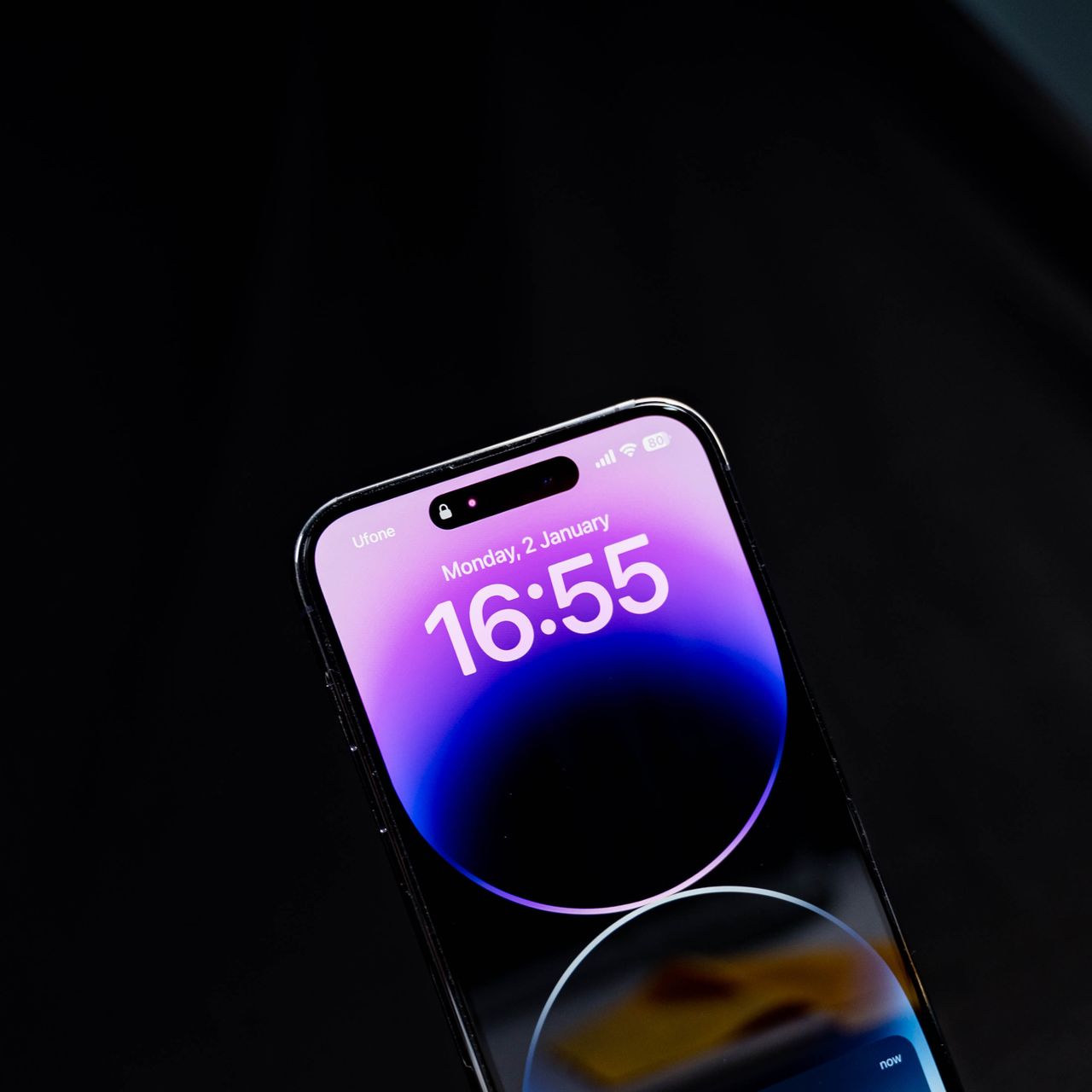
The Apple iPhone 14 Pro Max stands as a towering achievement in the smartphone landscape, representing the absolute pinnacle of Apple’s mobile engineering. While it requires a hefty financial investment, it justifies its premium tier by delivering massive battery endurance, a blindingly bright display, and a suite of exclusive “Pro” features—like the innovative Dynamic Island and an advanced camera system—that leave the baseline iPhone 14 models far behind. It remains the definitive choice for enthusiasts, power users, and mobile content creators who want an uncompromising smartphone experience.
- see it
Hardware Pros & Cons
- Pros: Masterclass chassis construction and durability; class-leading battery longevity; exceptional processing speeds; groundbreaking brightness levels; multi-functional Dynamic Island; high-fidelity video capture.
- Cons: Very expensive; physical footprint is bulky and heavy; still saddled with a slow, aging Lightning port; iterative design language feels overly familiar.
Technical Specifications
| Core Component | Specification Value |
| Operating System | iOS 16 |
| Processor | A16 Bionic (4nm, 6-Core CPU, 5-Core GPU, 16-Core Neural Engine) |
| Memory | 6GB LPDDR5 RAM |
| Storage Tiers | 128GB, 256GB, 512GB, 1TB |
| Dimensions | 6.33 x 3.05 x 0.31 inches |
| Weight | 8.47 ounces (240 grams) |
| Display | 6.7-inch Super Retina XDR OLED (2,796 x 1,290 pixels, 460ppi, 1Hz–120Hz ProMotion) |
| Peak Brightness | 1,000 nits (typical), 1,600 nits (HDR content), 2,000 nits (outdoor sunlight peak) |
| Environmental Protection | IP68 dust and water resistance (up to 6 meters for 30 minutes) |
Chassis, Ergonomics, and Port Design
Visually, the iPhone 14 Pro Max relies heavily on the design blueprint laid down by its immediate predecessors. Aside from fresh color variations (such as Deep Purple, Gold, Space Black, and Silver), a slightly thicker rear camera array, and the elimination of the display notch, it looks nearly identical to the iPhone 13 Pro Max.
Weighing in at a substantial 8.47 ounces and featuring hard, unyielding flat stainless steel edges, this phone is a massive slab of hardware. It sits comfortably in the hand if you are accustomed to large devices, matching the physical presence of top-tier Android rivals like the Samsung Galaxy S22 Ultra or the Google Pixel 6 Pro. However, users with smaller hands will find its physical footprint overwhelming and may want to consider the dimensionally friendlier 6.1-inch iPhone 14 Pro instead.
[Chassis Ergonomics Blueprint]
 ┌─────────────────────────────────────────────────────────┐
 │ Left Edge: Mechanical Ring Switch & Split Volume Keys   │
 ├─────────────────────────────────────────────────────────┤
 │ Right Edge: Elongated Power / Lock Key                   │
 ├─────────────────────────────────────────────────────────┤
 │ Base Edge: Dual Stereo Grills & Legacy Lightning Port    │
 └─────────────────────────────────────────────────────────┘
The construction quality remains top-of-the-line. The surgical-grade stainless steel band handles minor impacts with ease, while Apple’s proprietary Ceramic Shield safeguards the glass front panel against scratches. Rounding out its structural integrity is an IP68 certification against water submersion and fine dust intrusion.
The Legacy Port and eSIM Shift
A major point of friction is the retention of Apple’s archaic Lightning port at the bottom edge. With iPads and MacBooks long since transitioned to standard USB-C connectivity, keeping the slower proprietary port feels outdated.
Furthermore, U.S. versions of the iPhone 14 family completely remove the physical SIM card tray. The ecosystem relies entirely on software-provisioned eSIMs. While configuring up to eight carrier profiles via on-screen QR code scanning or carrier Quick Transfer apps is fast, international travelers who frequently purchase cheap, local physical SIM cards at global airports will face an adjustment period.
Display: Dynamic Island and Always-On Tech
The 6.7-inch Super Retina XDR screen brings a couple of transformative changes to the user experience. While the pixel density remains razor-sharp at 460ppi, screen bezels have been noticeably thinned down to maximize usable workspace.
Welcome to the Dynamic Island
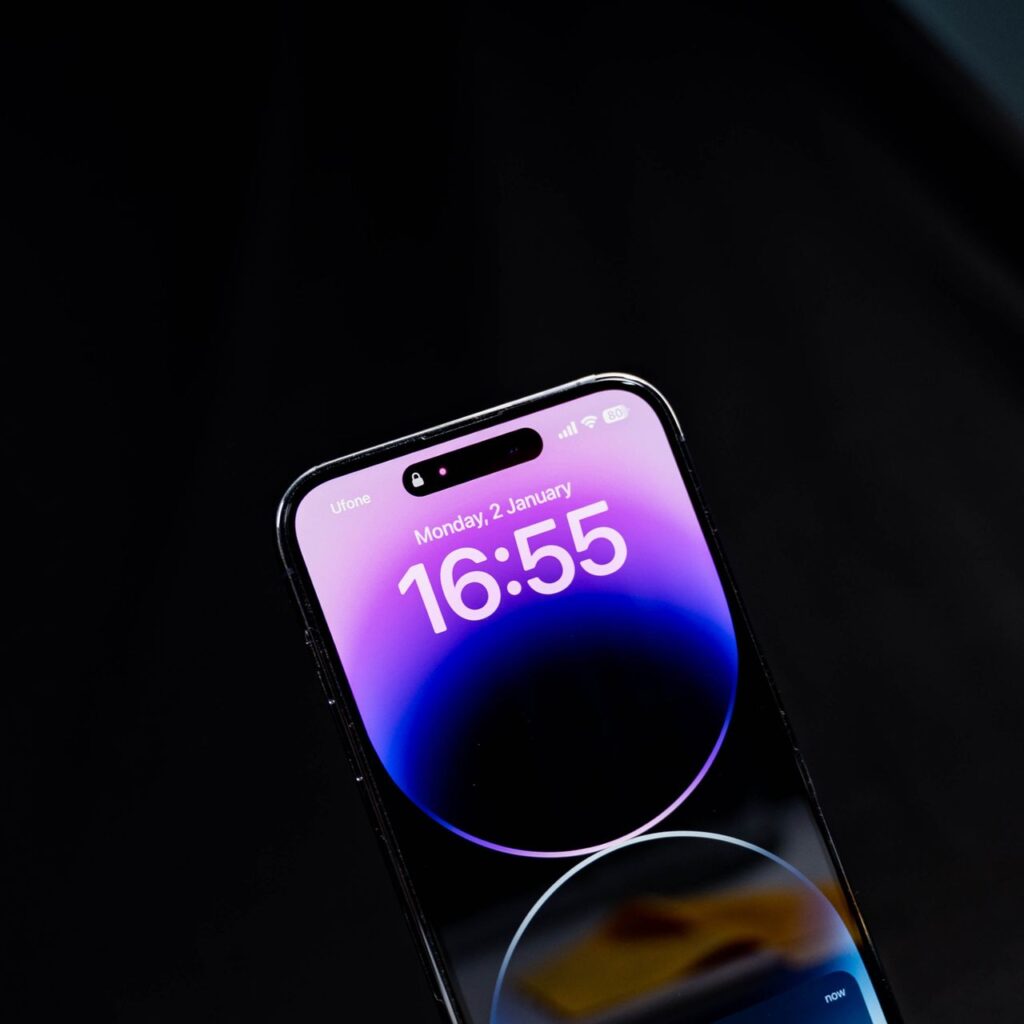
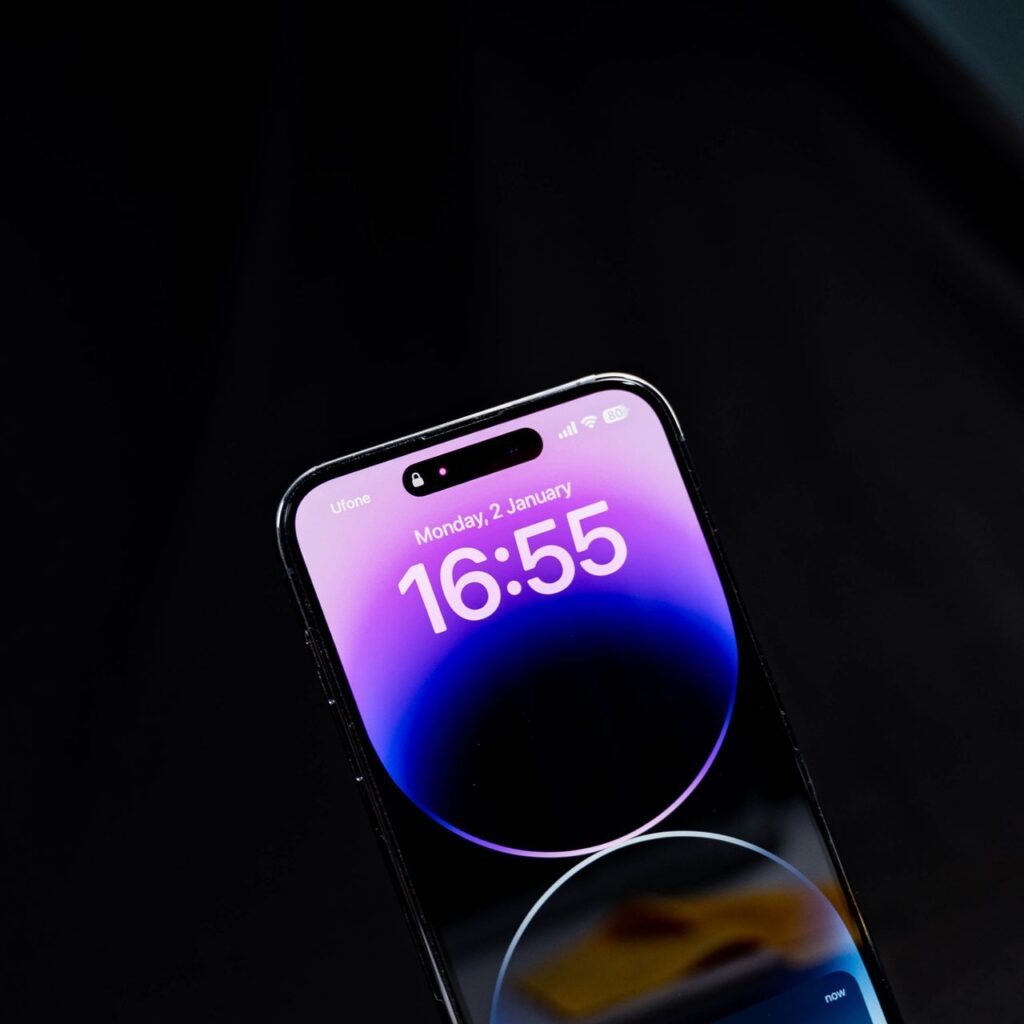
The most profound visual change is the retirement of the static hardware notch in favor of the Dynamic Island. Rather than leaving a dead, black pill-shaped cutout sitting inertly at the top of your apps, Apple integrated the camera cutout directly into the software interface.
[Dynamic Island Fluid States]
 ┌───────────────┐        ┌─────────────────────────┐        ┌───────────────┐
 │ Standard Pill │  ───►  │ Expanded System Alert   │  ───►  │ Live Activity │
 │ (Camera/FaceID)│        │ (Charging/NFC/AirPods)  │        │ (Music/Timer) │
 └───────────────┘        └─────────────────────────┘        └───────────────┘
The Island dynamically shifts shape, stretching horizontally and vertically to convey actionable data without interrupting your background tasks. It serves as a continuous display hub for:
- Incoming phone calls and ongoing FaceID authentications.
- Live step-by-step turn markers via Apple Maps navigation.
- Background countdown timers and active media playback widgets.
Interacting with it via continuous taps or long-presses lets you jump straight into the corresponding software, though getting used to touching the glass directly over the front camera lens takes some practice.
A New Take on the Always-On Display
Thanks to an advanced LTPO backplane and a dedicated Display Engine inside the silicon, the Pro Max screen can drop its refresh rate to a minuscule 1Hz. This structural upgrade allows Apple to finally deploy an Always-On Display (AOD).
Unlike the minimalist, mostly black AOD layouts typical of Android devices, Apple’s implementation keeps your entire lock screen image, font colors, and custom widgets fully visible, simply dimming the backlight to a power-sipping minimum. It offers an instantaneous glance at notifications, schedule events, and the weather without needing to physically wake the phone.
Performance and Silicon Efficiency
Powering the phone is the custom A16 Bionic processor. Moving from a 5nm architecture to an ultra-efficient 4nm process allows Apple to fit 16 billion transistors onto the silicon. The system pairs two high-performance computing cores with four high-efficiency cores, supported by a 5-core GPU with an immense 50% increase in pure memory bandwidth. Memory hardware also moves from LPDDR4 to the faster LPDDR5 specification, though capacity remains flat at 6GB.
Synthesized Speed Rankings
In objective computational testing, the A16 Bionic widened the performance gap between Apple and its ecosystem competitors:
- Geekbench 5 (CPU Raw Muscle): The iPhone 14 Pro Max jumped to 1,874 on single-core testing and 5,445 on multi-core performance. This leaves older Apple devices like the A15-equipped 13 Pro Max (1,721 / 4,629) comfortably behind, while utterly dominating Android flagships utilizing Qualcomm’s Snapdragon 8 Gen 1 (1,232 / 3,433) or Google’s custom Tensor chip (1,021 / 2,813).
- Gaming Fluidity (GFXBench Aztec Ruins): The device locked in a blistering 54.48fps under peak stress loads. Heavy, graphically demanding titles like Genshin Impact or high-speed casual games like Alto’s Adventure execute perfectly without dropped frames or visual stuttering.
Thermal Note: While real-world gaming runs cleanly, running extreme systemic stress benchmarks back-to-back can push internal temperatures high enough to prompt safety thermal shutdowns. In standard daily operations, however, heat dispersal remains well-controlled.
Battery Life and Charging Limitations
Despite dropping its internal battery volume down slightly from the previous year’s model to 4,323mAh, the architectural efficiency of the 4nm A16 Bionic results in stellar battery life. In continuous Wi-Fi video streaming marathons set to maximum display brightness, the iPhone 14 Pro Max outlasted its predecessor by a full hour, running for 19 hours straight.
[Battery Playback Lifespan - Wi-Fi Streaming]
iPhone 14 Pro Max: ═══════════════════════════════════ 19 Hours
iPhone 13 Pro Max: ═════════════════════════════════ 18 Hours
Galaxy S22 Ultra:  ════════════════════ 12 Hours
By comparison, Samsung’s Galaxy S22 Ultra ran dry at the 12-hour mark in identical environments.
The Charging Speed Bottleneck
Apple continues to lag behind the rest of the industry when it comes to quick-charging capabilities. The phone does not ship with a charging block in the box and caps its wired recovery at a modest 20W.
- Wired Recovery: Restoring an empty battery to a 50% state takes 37 minutes, with a full 0-100% top-off demanding roughly an hour and a half.
- Wireless Charging: Speeds hit 15W when paired with magnetic MagSafe docks, but plummet to a sluggish 7.5W on standard Qi-certified wireless charging pads.
Wireless Infrastructure and Audio Fidelity
The phone updates its cellular hardware to Qualcomm’s X65 5G modem, raising its theoretical download speed ceiling to 10Gbps while optimization features boost overall power management. Real-world testing across Verizon and AT&T networks reveals robust signal retention and clean data throughput.
- Wi-Fi Protocols: Apple leaves the radio generation flat at Wi-Fi 6 instead of adopting the wider Wi-Fi 6E band, though near-router throughput easily hits 435Mbps.
- Bluetooth 5.3 Upgrade: The upgraded Bluetooth radio improves energy consumption and offers rock-solid peripheral pairing across a 10-meter range. Supported audio codecs include AAC, Apple Lossless, and Spatial Audio tracking.
- Voice Quality: Standard HD voice calls sound incredibly crisp through the integrated earpiece speaker, which punches out more than enough acoustic volume to overcome chaotic urban environments.
- Speaker Tuning: The device features a hybrid dual-speaker configuration utilizing the ear capsule alongside a base-firing driver. Music and podcasts sound rich and balanced at 50% volumes. However, turning the volume to 100% introduces noticeable distortion and crackle on tracks with heavy sub-bass lines.
Next-Generation Emergency Safety Tools
Apple embeds two core safety features designed to offer peace of mind when things go wrong:
- Crash Detection: Combining a high-G accelerometer capable of reading up to 256Gs of impact force with an advanced gyroscope, the system interprets sudden vehicle impacts, cabin air pressure drops (from airbag deployments), and shattering glass sounds. If an accident is identified and the driver is unresponsive, the device automatically dials local emergency response teams and texts precise GPS coordinates to your chosen safety contacts.
- Satellite Emergency SOS: Built specifically for wilderness explorers wandering outside cellular and Wi-Fi networks, custom internal antennas interface with low-Earth-orbit Globalstar satellites. An on-screen UI guides you to aim the phone toward moving satellites to send compressed text alerts, medical profiles, and location maps to dispatch centers.
Camera System: The 48MP Resolution Shift
The headline camera upgrade is the retirement of the long-standing 12MP primary sensor in favor of a massive 48MP quad-pixel main lens that is 65% physically larger than its predecessor.
                  ┌──► 12MP Pixel-Binned Output (Four pixels combined for low-light clarity)
                  │
[48MP Primary Sensor]──► 2x Lossless Optical Crop (Uses central 12 megapixels)
                  │
                  └──► 48MP ProRAW Output (Zero compression for professional editing)
By default, the phone groups four neighboring pixels into one large super-pixel, outputting bright, vibrant, and incredibly clean 12MP images. For professional landscape photographers or editors, switching into uncompressed ProRAW mode unleashes the full 48-million-pixel sensor stream, allowing you to crop deeply into an image without experiencing blocky digital degradation.
The secondary 12MP ultra-wide and 12MP 3x optical telephoto lenses both receive upgraded apertures to pull in more ambient light. Additionally, the high pixel density of the main camera allows for a pixel-cropped 2x optical zoom mode, giving users four native framing lengths (0.5x, 1x, 2x, 3x) without needing to rely on muddy digital scaling.
Photonic Engine and Color Balance
Samsung and Google devices sometimes edge past Apple in pure daytime still-image contrast, but the 14 Pro Max closes the gap with its Photonic Engine. This deep computational imaging process performs mathematical exposure calculations much earlier in the rendering pipeline, preserving accurate skin tones and widening dynamic range.
Apple has also slightly cooled down its native white balance tuning, preventing the overly warm, yellowish cast seen on older iPhones. On the front of the device, the 12MP TrueDepth selfie camera adds integrated autofocus alongside a wider f/1.9 aperture, producing incredibly crisp group and portrait shots.
Unmatched Mobile Video Tools
While Android alternatives remain competitive in still photography, Apple continues to lead when it comes to moving images:
- Cinematic Mode: The artificial background-blurring portrait tool for videos now captures footage at full 4K resolution at 24fps or 30fps.
- Action Mode: This feature dynamically crops your 4K sensor input down to a stabilized 2.8K resolution to counteract aggressive physical movement. The real-time digital tracking eliminates high-frequency shakes and bounding hops, making frantic handheld action look as smooth as if it were captured on an expensive mechanical gimbal stabilizer.
Market Positioning and Final Thoughts
The Apple iPhone 14 Pro Max sits firmly at the top of the smartphone market, with pricing stretching from $1,099 for the 128GB baseline model up to $1,599 for the maximum 1TB variant.
If you want the absolute best and most versatile smartphone Apple makes, the Pro Max is an exceptional purchase. However, if the high entry price or hefty physical footprints give you pause, the standard 6.1-inch iPhone 14 Pro offers identical processing power, camera systems, and display features in a much lighter package for $100 less.
For buyers looking outside of the iOS wall, the cheaper Google Pixel 6 Pro remains a fantastic alternative for pristine Android software and clean still-imaging, while Samsung’s Galaxy S22 Ultra remains the superior tool for raw 10x telephoto zoom distances and stylus productivity. Ultimately, thanks to its peerless video performance, exceptional battery life, and the interface transformations brought by the Dynamic Island, the iPhone 14 Pro Max earns its status as an absolute mobile triumph.