

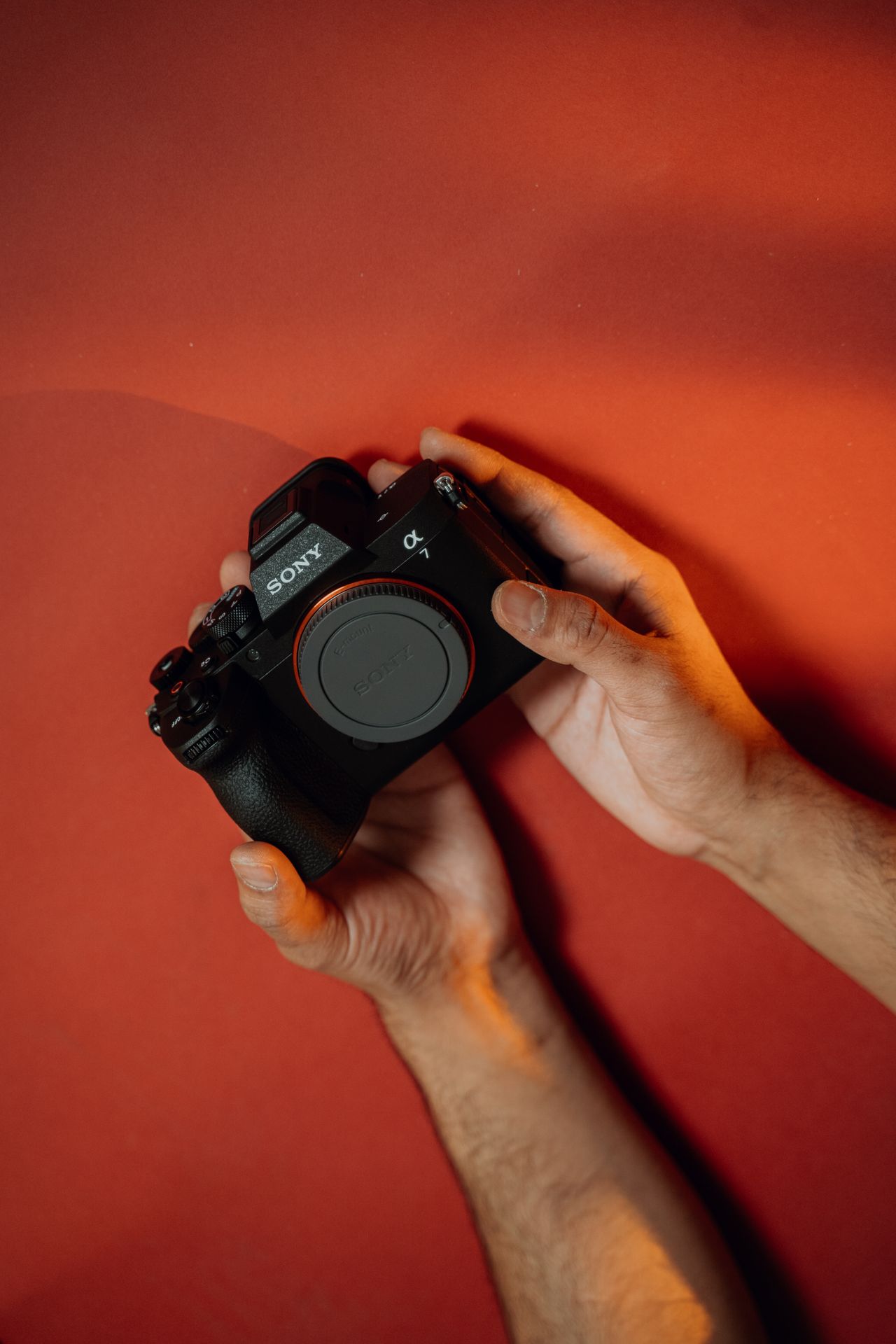
Sony Alpha A7 III Review: Bringing Pro Features To The Mainstream
Table of Contents
The Sony Alpha A7 III was a major step into full-frame mirrorless photography for me. After many years using Canon DSLR bodies and lenses, moving to Sony was not a decision I made casually. The camera, lenses, accessories, and learning curve represented a substantial investment.
My goal was simple: find out whether the A7 III could become my primary camera for travel, landscapes, waterfalls, and everyday photography.
After extensive use, I found plenty to like. The full-frame sensor, fast continuous shooting, image stabilization, live-view experience, and overall image quality made the A7 III a highly capable camera. At the same time, battery consumption, menu complexity, lens prices, and some handling quirks kept it from being perfect.
Here is what convinced me to make the switch, what I learned after using the camera, and where I still prefer my older DSLR setup.
Why I Chose the Sony Alpha A7 III
My decision came down to several factors: sensor size, features, durability, cost, specifications, and the camera’s strong reputation among photographers.
Full-Frame Capability
One of the biggest attractions was the A7 III’s 35mm full-frame sensor.
My previous Canon EOS 70D used an APS-C sensor. The crop factor could be useful when photographing distant subjects, but it could also make wide landscape compositions more difficult.
For waterfall and landscape photography, having a full-frame sensor gave me more flexibility when composing a scene. I could capture a broader field of view without having to step backward or constantly rethink my position.
That advantage became particularly valuable when photographing from narrow trails, overlooks, riverbanks, and other locations where moving farther away simply wasn’t practical.
Moving From DSLR to Mirrorless
The A7 III was also my first serious mirrorless camera.
Compared with a traditional DSLR, its body is smaller and lighter, and the electronic viewfinder and LCD provide a different way of working. Mirrorless construction also eliminates some of the mechanical components found in a DSLR.
However, I discovered that the lighter body doesn’t necessarily mean a lighter complete camera system. High-quality full-frame lenses can be substantial, and once accessories are added, the difference becomes much less dramatic.
Cost Versus Long-Term Use
The Sony system required a considerable financial commitment.
My previous Canon setup had already accumulated significant costs over the years because I had purchased multiple bodies and replaced lenses several times. That experience made me think differently about spending more upfront on equipment that might prove more reliable over the long term.
The A7 III with the FE 24-105mm F4 G OSS lens was considerably more expensive than simply buying another familiar Canon body and lens.
Still, I wasn’t only buying a camera body. I was investing in a new system built around full-frame photography.
Specifications That Caught My Attention
The A7 III offered several specifications that represented a substantial upgrade from my EOS 70D.
The camera features a 24-megapixel full-frame CMOS sensor, compared with the approximately 20-megapixel APS-C sensor in the 70D.
Continuous shooting was another major advantage. The Sony can shoot at up to 10 frames per second, giving it considerably more speed for moving subjects and action photography.
It also supports 4K video, whereas my older Canon was limited to Full HD.
The A7 III additionally offers RAW capture, high ISO capability, in-body image stabilization, and two SD card slots. Having two memory-card slots was particularly reassuring when spending long days in the field.
Reputation
Another factor was the camera’s reputation.
By the time I purchased it, the A7 III had become widely regarded as one of the strongest enthusiast and professional-oriented mirrorless cameras in its price category.
The combination of reviews, specifications, full-frame performance, and the growing Sony lens ecosystem made the decision easier.
Since I was already considering purchasing another lens anyway, switching systems seemed worth the risk.
Getting the Most From the Sony A7 III
One lesson became obvious very quickly: the A7 III is not necessarily configured perfectly for every photographer straight out of the box.
The camera has an enormous number of settings, and learning which options actually matter to your personal workflow takes time.
Here are two adjustments that made a noticeable difference for me.
Preventing the LCD From Switching Off
I prefer composing photographs through the LCD rather than constantly using the electronic viewfinder.
One annoyance was the camera automatically switching away from the monitor whenever something passed close to the viewfinder sensor. A strap, clothing, or even an object casting a shadow could sometimes make the camera think I was looking through the finder.
Changing the FINDER/MONITOR setting to Monitor (Manual) solved this problem for my shooting style.
The exact menu layout can depend on firmware and configuration, so it is worth checking the current Sony manual if you are setting up the camera today.
Managing the Memory Cards Correctly
Another lesson involved memory-card management.
I found that removing or deleting files directly from the card using a computer could occasionally cause the camera to behave strangely when the card was returned to the camera.
Instead of treating the card like an ordinary computer storage drive, I adopted a simpler workflow:
- Copy photographs from the card to the computer.
- Verify that the files have transferred successfully.
- Reinsert the card into the camera if necessary.
- Format or delete the photographs using the camera itself.
For large collections of photographs, this approach is considerably less frustrating than trying to manage hundreds of individual files from the camera menu.
What the Sony A7 III Does Particularly Well
After spending substantial time with the camera, several strengths stood out.
Excellent LCD-Based Shooting
The LCD became one of my favorite features.
Instead of raising the camera to my eye every time, I could compose using the rear screen. This was especially useful in crowded places or whenever I needed to hold the camera above my head.
It also made unusual shooting angles much easier.
For example, when people were blocking my view, I could extend the camera upward and still compose the photograph using the screen.
Eventually, this became such a natural part of my workflow that I found myself using the viewfinder much less frequently.
Stronger Protection Against Wet Conditions
For waterfall photography, some degree of weather resistance is extremely useful.
The combination of the A7 III body and a weather-resistant lens gave me considerably more confidence when photographing around spray, mist, and light rain.
However, weather sealing should never be confused with waterproofing.
I learned that lesson personally after accidentally getting the camera submerged. Fortunately, the camera was still covered by warranty at the time.
The takeaway is straightforward: weather-resistant equipment can tolerate appropriate environmental exposure, but deliberately exposing it to water is still asking for trouble.
Full-Frame Image Capture
The full-frame sensor became one of the strongest reasons to keep the Sony as my primary landscape camera.
Wide scenes were easier to compose, and I could include more of the surrounding environment without constantly backing away from my subject.
That is particularly useful around waterfalls, where the best viewpoint may be close to the edge of a trail, river, or overlook.
APS-C cameras still have advantages, though. Their crop factor can be useful for distant wildlife and other subjects where additional apparent reach is desirable.
For that reason, I found a practical role for both systems rather than immediately abandoning my older Canon.
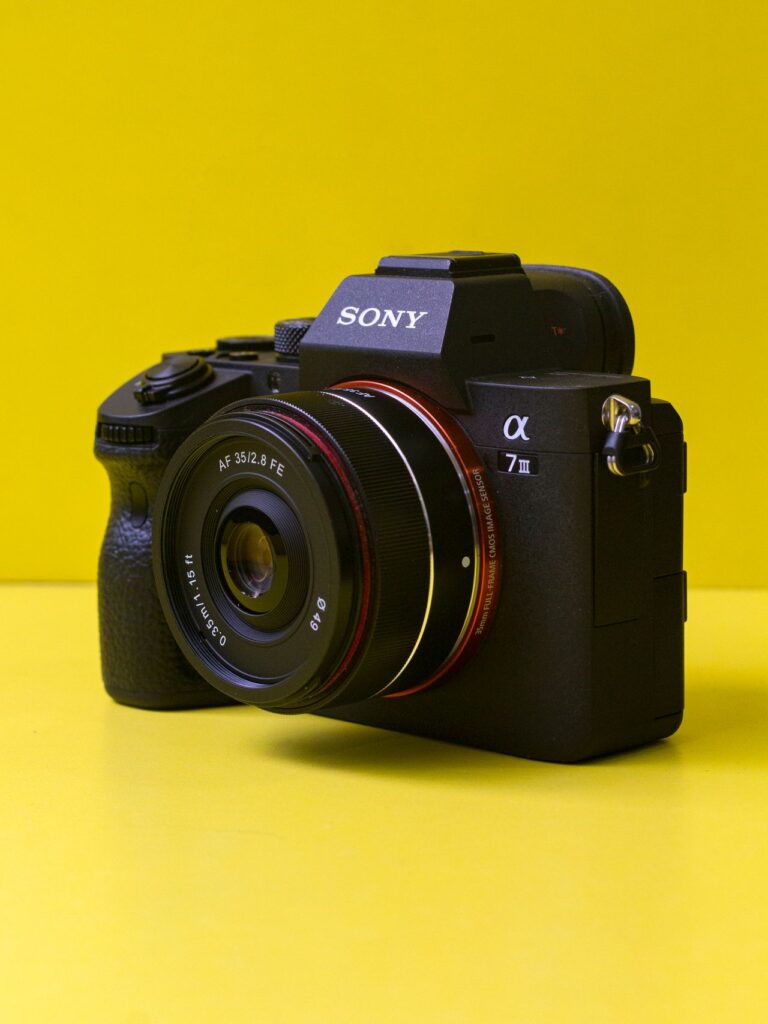
Image Quality
I noticed improvements in sharpness, detail, and color compared with photographs from my older Canon setup.
However, this comparison wasn’t perfectly scientific.
The Sony was paired with a high-quality FE 24-105mm F4 G OSS lens, while the Canon commonly used a broader-range 18-200mm zoom. Those lenses are designed with different priorities.
The Sony combination generally sacrificed some zoom range in exchange for optical quality and versatility.
The A7 III also benefits from in-body stabilization, which works alongside compatible lens stabilization and can help reduce camera shake.
What I Don’t Like About the Sony A7 III
The A7 III has plenty of strengths, but there are several areas where I still prefer the simplicity of a DSLR.
The Sony System Can Become Expensive
The biggest drawback is the price of building a full-frame system.
Quality Sony FE lenses can be expensive, sometimes costing as much as or more than the camera body itself.
Once you add memory cards, batteries, filters, tripod plates, straps, and other accessories, the investment grows quickly.
The long-term durability of the equipment can help justify the cost, but the initial commitment is significant.
Limited Zoom Range With My Preferred Lens
My preferred general-purpose lens is the FE 24-105mm F4 G OSS.
Its range works extremely well for travel, landscapes, and many everyday situations, but it doesn’t provide the reach I was accustomed to with an 18-200mm superzoom on my Canon.
I experimented with a Sony 24-240mm lens to regain some of that range.
While the broader focal-length coverage was convenient, I preferred the overall performance and handling of the 24-105mm setup.
Instead of compromising on my primary lens, I eventually used the Canon as a secondary camera with a telephoto lens.
That arrangement isn’t as convenient as having everything in one camera, but it works well in situations where changing lenses would be inconvenient.
Battery Life
Battery performance was another noticeable weakness compared with my older DSLR experience.
The A7 III uses a much-improved battery compared with earlier Sony mirrorless generations, but I still found that active shooting could consume power quickly.
The LCD and electronic viewfinder both require power, unlike the optical viewfinder of a traditional DSLR.
For longer trips, carrying spare batteries became essential.
I generally wouldn’t leave for a full day of serious photography without making sure I had multiple charged batteries available.
Complicated Menus
The A7 III offers an enormous amount of customization, but that flexibility comes at a cost.
The menu system can initially feel overwhelming. Finding a particular setting may require navigating through several pages and categories.
My Canon DSLR had more physical controls for some functions, making certain adjustments faster and more intuitive.
With enough practice, the Sony becomes easier to operate, and customizable buttons can improve the experience considerably. Nevertheless, there is definitely a learning period.
Controls Can Be Easy to Move Accidentally
Another minor frustration was accidentally changing shooting settings while handling the camera.
The camera has several dials and controls packed into a relatively compact body. When removing it from a strap or carrying system, I occasionally discovered that a setting had changed without me realizing it.
This is a relatively small issue, but it can matter when you’re photographing something that happens only once.
No Built-In Flash
The A7 III does not include a pop-up flash.
For photographers who frequently use fill flash, that means carrying an external flash or using another lighting solution.
Personally, this wasn’t a major problem because I rarely rely on an on-camera flash. For casual photographs, I often use my phone instead.
Sony A7 III Versus My Older Canon Approach
The two cameras ultimately developed different roles.
The Sony became my preferred camera for landscapes, waterfalls, travel, and general photography where the full-frame sensor and image quality were most valuable.
The Canon became useful as a secondary body for distant subjects and telephoto photography.
This arrangement also reduced the need to change lenses in the field.
When I knew I might photograph both a broad landscape and distant wildlife during the same outing, carrying two bodies could actually be more convenient than constantly swapping lenses.
The Sony’s faster burst rate also makes it capable of handling action and sports photography better than my older DSLR, although that wasn’t the main reason I purchased it.
Final Verdict
The Sony Alpha 7 III turned out to be a worthwhile upgrade for my photography.
It wasn’t perfect, and switching from Canon involved learning an entirely different system. The lenses were expensive, the menus took time to understand, and battery management became more important.
Nevertheless, the benefits outweighed those frustrations.
The 24-megapixel full-frame sensor, strong image quality, fast continuous shooting, stabilization, dual card slots, 4K video, and excellent LCD-based shooting made the A7 III a powerful tool for travel and landscape photography.
Most importantly, it changed the way I photograph.
I became much more comfortable composing from the LCD, shooting from unusual angles, and working with a full-frame sensor when photographing wide landscapes.
For someone who wants a serious full-frame mirrorless camera without immediately moving into the highest-priced professional bodies, the A7 III remains a compelling option.
My Overall Rating
Overall: 8.3/10
| Category | Rating |
|---|---|
| Image Quality | 9.0/10 |
| Workflow & Comfort | 8.0/10 |
| Battery Life | 7.0/10 |
| Shooting Speed | 9.5/10 |
| Value | 8.0/10 |
Pros
- Full-frame sensor
- Excellent image quality
- Fast 10 fps continuous shooting
- Effective in-body image stabilization
- Useful LCD live-view experience
- Dual SD card slots
- 4K video
- Good weather resistance when paired with appropriate lenses
- Strong overall build quality
Cons
- Full-frame lenses can be expensive
- Battery consumption can be noticeable during extended use
- Menu system has a substantial learning curve
- Limited zoom range with a 24-105mm general-purpose lens
- No built-in flash
- Some controls can be accidentally moved during handling
- File management is best handled carefully through the camera
Bottom Line
The Sony A7 III isn’t the smallest, cheapest, or simplest camera available, but it offers an impressive balance between professional-level capability and enthusiast-friendly usability.
For landscape and waterfall photography in particular, the combination of a full-frame sensor, stabilization, strong image quality, and a versatile 24-105mm lens makes it an excellent everyday setup.
If you are coming from an older APS-C DSLR, the transition may require patience. But once the controls become familiar, the A7 III has enough capability to remain useful well beyond the initial learning period.
For my own photography, that combination of capability and versatility is ultimately what made it my primary camera.
Note: Camera specifications, prices, firmware behavior, and lens availability can change over time. The experiences and ratings above should therefore be treated as a personal long-term-use perspective rather than a current laboratory comparison.