

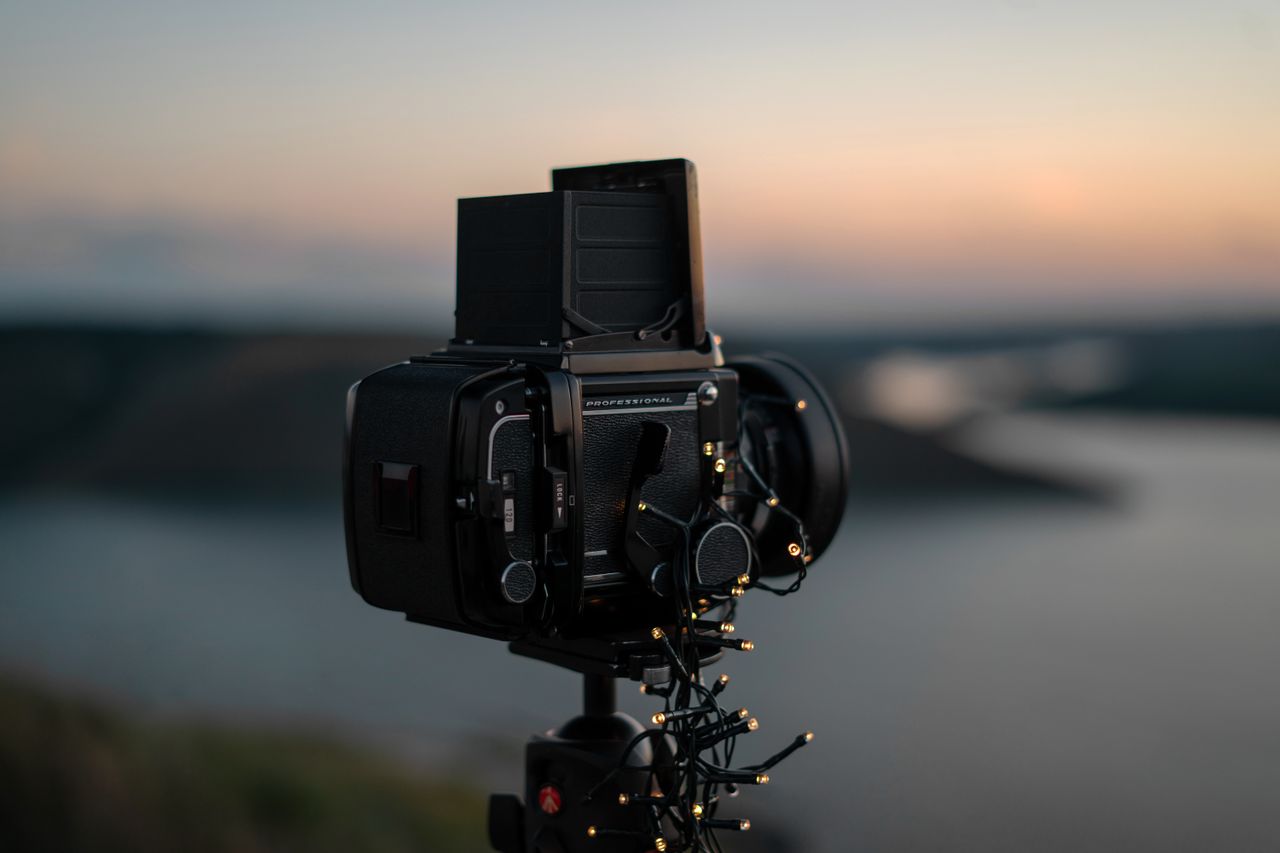
Why the Hasselblad 907X and CVF 100C Is the Ultimate Camera for 2024
Table of Contents
The Hasselblad 907X paired with the CFV 100C digital back occupies an unusual position in the medium-format camera market. It is simultaneously a modern high-resolution digital system and a remarkably faithful continuation of Hasselblad’s photographic heritage. For photographers familiar with the legendary 500-series film cameras, the concept is especially appealing: a digital back capable of producing 100-megapixel images can be attached to a camera platform that retains much of the visual character and modular philosophy associated with classic Hasselblad equipment.
But nostalgia alone cannot justify an expensive medium-format system. At this level, photographers expect exceptional image quality, reliable focusing, useful studio features, and a workflow that does not become an obstacle after the shutter is pressed.
After considering the system as a serious photographic tool, the 907X and CFV 100C make a compelling case for themselves. They combine extremely high resolution with a relatively compact body, strong autofocus capabilities, excellent files, and compatibility with both modern XCD lenses and certain classic Hasselblad systems. There are compromises, particularly around software and workflow, but the core photographic experience is impressive.
Key Specifications
| Specification | Hasselblad 907X + CFV 100C |
|---|---|
| Camera format | Medium format mirrorless/modular system |
| Digital back | Hasselblad CFV 100C |
| Sensor resolution | 100 megapixels |
| Sensor type | Medium-format CMOS |
| Autofocus | Phase-detection autofocus with 294 focus regions |
| Face detection | Yes |
| Shutter options | Electronic and compatible leaf-shutter lenses |
| Flash synchronization | Up to high shutter speeds with compatible leaf-shutter lenses |
| Storage | Built-in 1 TB SSD plus removable storage |
| Connectivity | USB-C tethering |
| Lens compatibility | Hasselblad XCD lenses; compatibility with selected classic Hasselblad systems |
| Video | No |
| Primary strengths | Resolution, image quality, compactness, studio photography |
| Best suited to | Portrait, fashion, commercial, studio, fine-art and high-resolution photography |
Specifications and capabilities above are based on the supplied reference material and describe the system as discussed there.
Design and Build Quality
The first surprise is how compact the system feels.
Medium-format cameras have historically carried a reputation for being large, heavy and somewhat cumbersome. Professional systems from the traditional medium-format world can demand substantial support equipment, particularly when paired with large lenses and studio accessories. The 907X takes a different approach.
Its relatively compact form factor makes the system feel much closer to a high-end DSLR or mirrorless camera than the phrase “100-megapixel medium format” might suggest. For photographers who want maximum image quality without carrying an enormous studio camera, that is a significant advantage.
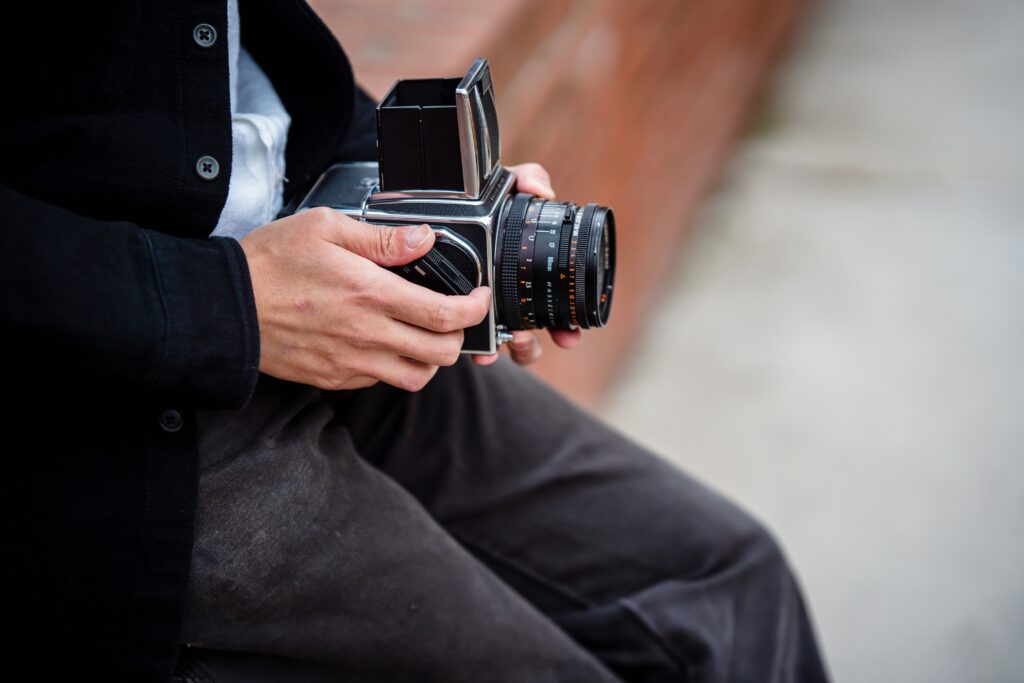
The modular design is also important. The CFV 100C is not merely a conventional camera sensor housed inside a standard mirrorless body. It is a digital back that connects Hasselblad’s current technology with its historical camera systems. That makes the platform unusually interesting for photographers who already own compatible classic Hasselblad equipment.
Build quality is another strong point. Hasselblad’s design philosophy emphasizes precision and simplicity rather than filling the camera with features simply because they are available. The result is a system that feels purpose-built for photography.
One accessory worth considering is the optional grip. While the camera can certainly be used without it, a grip makes considerably more sense if the system will be handheld for extended periods. The compact design is helpful, but 100-megapixel medium format equipment is still specialized photographic hardware rather than an everyday lightweight travel camera.
Studio Performance
The 907X and CFV 100C make particularly strong sense in controlled environments.
Studio photography places unusual demands on a camera. Resolution matters, but so do flash compatibility, focusing precision, tethering, color and reliability. When photographing fashion or portraits, tiny focusing errors can become obvious because the enormous files reveal details that lower-resolution cameras simply cannot.
The system’s leaf-shutter compatibility is particularly valuable.
With compatible lenses, the physical shutter is located within the lens rather than relying exclusively on a focal-plane shutter. This allows photographers to synchronize flash at much higher shutter speeds than conventional systems normally permit. For studio and location work, that can provide much greater creative flexibility.
Imagine photographing a model outdoors with powerful strobes. A high shutter speed can help control ambient light while still allowing the photographer to use artificial lighting creatively. That is one of the areas where medium-format leaf-shutter systems can become genuinely useful rather than merely technically impressive.
The supplied experience also highlights an important practical point: photographers should pay attention to the selected shutter mode when connecting studio flash equipment. Electronic and leaf-shutter operation are not interchangeable in every workflow, and the appropriate setting can determine whether a flash fires correctly.
Autofocus Performance
Autofocus is arguably one of the most impressive aspects of this system.
Historically, medium-format cameras often sacrificed autofocus sophistication in exchange for image quality. That trade-off becomes increasingly difficult to justify as modern full-frame cameras become extremely capable.
The CFV 100C system includes 294 focus regions and face detection, giving photographers much more flexibility than the single-point or comparatively basic autofocus systems associated with older medium-format platforms.
For portrait and fashion photography, this matters enormously.
A 100-megapixel sensor is unforgiving. A slightly missed focus point that might be invisible in a modest-resolution file can become glaring when the photograph is examined at full resolution. The larger sensor also makes depth of field shallower for equivalent framing and aperture, further increasing the consequences of focusing errors.
Face detection therefore isn’t simply a convenience feature. In this context, it can be an important component of getting consistently usable images.
In controlled studio conditions, the autofocus performance described in the reference material was highly reliable, including when the subject was moving. That makes the camera considerably more practical for modern portrait work than its retro-inspired design might suggest.
Image Quality and 100-Megapixel Resolution
The headline feature is obvious: 100 megapixels.
At first glance, that number can sound excessive. For many photographers, it is. A 24-, 33-, 45- or 60-megapixel camera can already produce files that are more than sufficient for ordinary editorial work, social media, portraits and many commercial applications.
The value of 100 megapixels becomes clearer when considering professional post-production.
High resolution gives photographers room to crop aggressively while retaining substantial detail. It can also be useful when an image needs extensive retouching, subject isolation or compositing. Commercial photographers frequently need to manipulate photographs beyond their original composition, and additional pixels provide valuable flexibility.
The files are also particularly well suited to detailed editing. The reference experience emphasizes strong dynamic range, abundant detail and considerable freedom for color grading.
This is where the medium-format sensor becomes more than a specification-sheet advantage. A large sensor combined with extremely high resolution can produce files with an unmistakably rich level of information. When lighting, lens selection and technique are all under control, the resulting images can withstand intensive post-processing.
Of course, 100 megapixels is not a magic button. It cannot compensate for poor lighting, weak composition, missed focus or an unsuitable lens. Nor does every photographer need it. But for photographers who routinely crop, retouch or produce large-format commercial imagery, the additional resolution has practical value.
Tethering and Software Workflow
The biggest weakness is not the image quality. It is the software ecosystem.
The camera can tether through USB-C, which is essential for many studio photographers. However, the workflow is centered around Hasselblad’s own Phocus software.
Phocus is a capable application, and the files themselves provide plenty of latitude for editing. The problem arises when a photographer’s existing workflow depends heavily on another platform, particularly Capture One.
The supplied reference describes this limitation as a major inconvenience. For photographers committed to Capture One, the inability to use the native Hasselblad files directly in the same way as supported camera systems can create an undesirable extra step. Exporting files to another format can preserve usability but undermines some of the advantages of a streamlined RAW workflow.
This is an important distinction because professional photographers rarely choose equipment in isolation. A camera has to fit into an ecosystem that includes computers, software, storage, color management, tethering, backup and client delivery.
For someone already comfortable with Phocus, this is unlikely to be a major problem. For a photographer whose entire workflow is built around Capture One, however, it could become a decisive consideration.
Storage and Battery Life
The built-in 1 TB SSD is an unusually convenient feature.
Internal storage eliminates one common source of frustration: arriving at a shoot and realizing the memory card was left behind, is full, or has developed a problem. It also provides substantial capacity for the large files generated by a 100-megapixel sensor.
That said, internal storage should not be treated as a replacement for a robust backup strategy. Professional photographers should still transfer and back up important images as soon as practical.
The system’s battery performance is described positively, although photographers planning full-day shoots should carry spare batteries. That is particularly sensible for intensive studio sessions involving frequent autofocus, image review, tethering and continuous shooting.
Pros and Cons
Pros
- Exceptional 100MP image quality: Provides enormous levels of detail and significant cropping flexibility.
- Compact medium-format design: Much easier to handle than many traditional medium-format systems.
- Excellent autofocus: 294 focus regions and face detection make the system more practical for modern portrait work.
- Strong studio performance: Particularly attractive for controlled portrait and fashion photography.
- Leaf-shutter compatibility: Enables high-speed flash synchronization with compatible lenses.
- Built-in 1TB SSD: Convenient and reduces dependence on removable media.
- Excellent RAW files: Strong detail, dynamic range and color flexibility.
- Classic Hasselblad compatibility: The digital back can bridge modern digital photography and compatible legacy Hasselblad bodies.
- High-quality XCD lens ecosystem: Modern lenses can take full advantage of the sensor’s resolution.
Cons
- Expensive: Even though it is comparatively affordable within medium format, the system remains a serious investment.
- Capture One limitations: Photographers invested in Capture One may find the workflow frustrating.
- Phocus dependency: Hasselblad’s software becomes an important part of the workflow.
- Limited versatility outside still photography: This is a dedicated photographic system with no video capability.
- Lens costs can add up quickly: The camera is only part of the total system investment.
- Not ideal for every type of field photography: Its strengths are more obvious in deliberate, controlled photography than demanding action-oriented use.
Who Is This For?
The Hasselblad 907X and CFV 100C make the most sense for photographers who can actually exploit their extraordinary image quality.
Studio and fashion photographers
This is arguably the system’s natural home. The combination of high resolution, accurate autofocus, excellent files and leaf-shutter flash capabilities is particularly attractive for portrait and fashion work.
Commercial photographers
Photographers producing advertising, product, beauty or other commercial imagery can benefit from the enormous files. Cropping, retouching and compositing become more flexible when there is so much image data available.
Fine-art photographers
For carefully composed images where maximum detail matters, the system offers a compelling platform. The ability to use compatible classic Hasselblad equipment also adds a unique creative dimension.
Hasselblad enthusiasts
For photographers already invested in Hasselblad’s legacy, the CFV 100C is especially interesting. It provides a path from classic film-era equipment to modern digital imaging without abandoning the character of the older system.
Photographers who prioritize portability within medium format
The system is worth considering for anyone who wants medium-format image quality without moving to a substantially larger professional camera platform.
It is less compelling for photographers who primarily shoot fast-moving sports, wildlife or situations where rugged field versatility and advanced subject tracking are more important than resolution and deliberate composition.
It is also a poor fit for anyone specifically looking for a hybrid stills-and-video camera. This is a still-photography system by design.
Final Verdict
The Hasselblad 907X and CFV 100C are impressive not because they attempt to be the camera for everyone, but because they execute their particular mission extremely well.
The combination of a compact body, 100-megapixel medium-format imaging, sophisticated autofocus, excellent RAW files and high-speed flash capability makes it a formidable tool for serious still photography. The built-in 1TB SSD is another thoughtful feature, while compatibility with classic Hasselblad equipment gives the system an identity that few modern digital cameras can match.
The biggest reservation is the software workflow. Photographers who rely on Capture One should investigate the compatibility limitations carefully before committing to the system. Phocus is capable, but changing an established professional workflow can be more disruptive than any camera specification suggests.
The price also needs context. Around the $8,000 level discussed in the reference material, the CFV 100C is expensive by mainstream camera standards, but it is considerably more approachable than many high-end medium-format systems. Once lenses and accessories are included, however, the overall investment can rise substantially.
Ultimately, the 907X and CFV 100C are best understood as a specialist high-resolution stills platform rather than an all-purpose camera.
For portrait, fashion, studio, commercial and fine-art photographers who value extraordinary detail and a distinctive Hasselblad shooting experience, it is an exceptionally compelling option. For photographers who need video, extensive action-oriented autofocus or a frictionless Capture One workflow, there are more practical alternatives.
The most impressive thing about the system may therefore be its balance. It delivers genuine medium-format image quality and 100-megapixel files while remaining remarkably compact. Add the ability to connect modern digital imaging with Hasselblad’s photographic heritage, and the 907X/CFV 100C becomes much more than another high-resolution camera.
It is a modern medium-format system with a distinctly old-school soul — and for the right photographer, that combination is difficult to beat.