

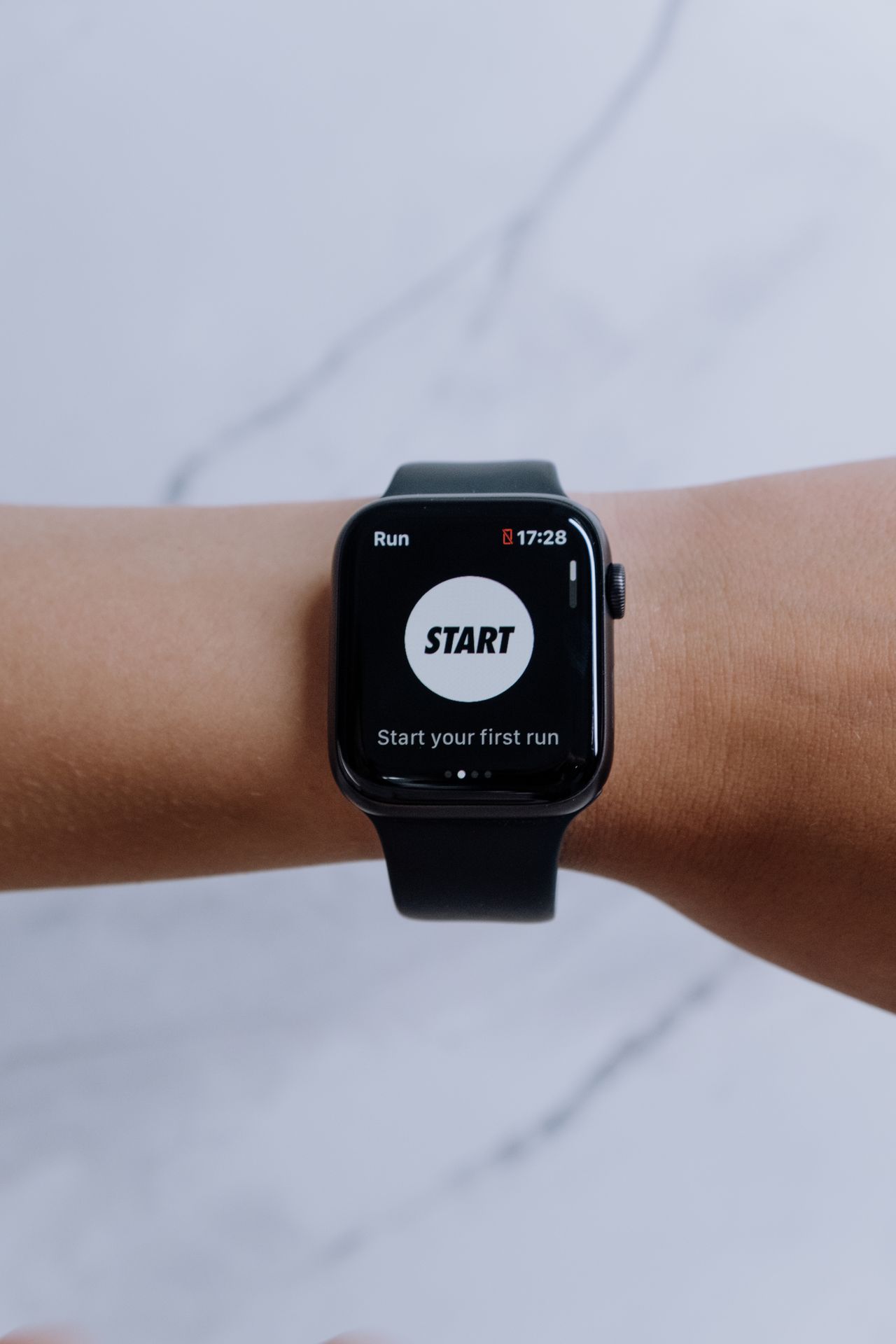
Smartwatches vs. Fitness Trackers: Which Wearable Device Do You Need?
Table of Contents
Your wrist can now do far more than tell time. Modern wearable devices can count steps, monitor heart rate and sleep, track workouts, display notifications, make payments, and—in some models—even take calls or provide advanced health measurements.
But there is a catch: more features do not necessarily mean a better device for you.
The two biggest categories are smartwatches and fitness trackers. They overlap considerably, making the buying decision surprisingly difficult. A fitness tracker may be all you need if your priority is exercise and health monitoring. A smartwatch, meanwhile, can become a miniature extension of your smartphone.
So which one deserves a place on your wrist?
The answer depends less on the number of features and more on how you actually plan to use the device.
Smartwatch vs. Fitness Tracker: What’s the Difference?
At a basic level, a fitness tracker is designed primarily around health and activity monitoring, while a smartwatch combines those capabilities with broader smartphone and productivity features.
Today’s boundaries are increasingly blurred. Many fitness trackers can display notifications and track workouts, while modern smartwatches can provide sophisticated fitness and health data. Consumer Reports notes that virtually all current wearables cover basics such as steps, sleep, heart rate and workout tracking, while higher-end models add features such as fall detection and specialized health sensors. Consumer Reports
| Feature | Fitness Tracker | Smartwatch |
|---|---|---|
| Step tracking | Excellent | Excellent |
| Heart-rate monitoring | Common | Common |
| Sleep tracking | Common | Common |
| Workout tracking | Excellent | Excellent |
| GPS | Available on many models | Common |
| Smartphone notifications | Basic | Extensive |
| Calls/messages | Limited | Often supported |
| Third-party apps | Limited | Extensive |
| Mobile payments | Sometimes | Common |
| Battery life | Usually longer | Usually shorter |
| Price | Generally lower | Generally higher |
| Best for | Health and fitness | Fitness + everyday smart features |
Choose a Fitness Tracker If Fitness Is the Priority
Imagine you want a device that answers four questions:
- How many steps did I take?
- How much did I sleep?
- What was my heart rate?
- How active was I today?
If that’s essentially your wish list, a fitness tracker may be the smarter purchase.
Fitness trackers tend to be smaller, simpler and less expensive than full-featured smartwatches. Their streamlined design can also mean longer battery life, allowing you to wear them continuously—including overnight.
That matters because consistency is more valuable than complexity. A device sitting on your charger cannot collect your sleep or activity data.
For example, suppose you’re trying to build a daily walking habit. You don’t need dozens of apps on your wrist. A lightweight tracker that records steps, heart rate and workout duration may give you everything necessary to establish a target such as 8,000 steps per day and monitor your progress.
Consumer Reports’ testing has historically found many fitness trackers to be strong performers for step counting, while also noting that trackers generally cost less than full-featured smartwatches. Consumer Reports
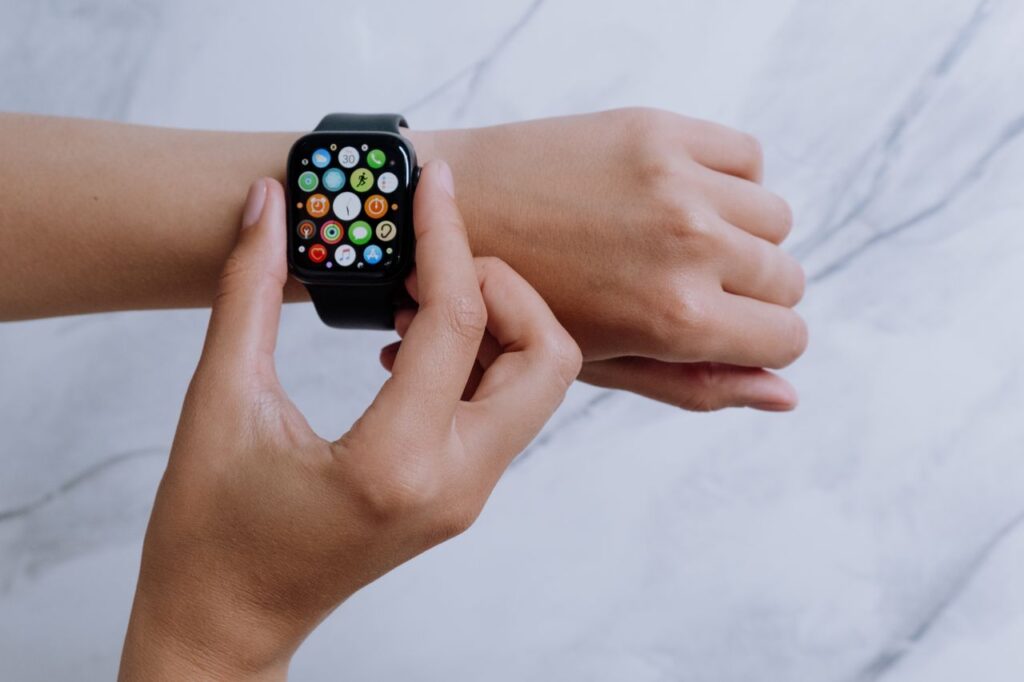
Fitness trackers are particularly suitable for:
- Beginners starting an exercise routine
- People primarily interested in steps, sleep and activity
- Users who want long battery life
- Budget-conscious shoppers
- People who dislike large watches
- Anyone who wants fewer distractions from their phone
Choose a Smartwatch If You Want a Phone on Your Wrist
Now imagine a different user.
You are commuting to work, receiving messages throughout the day, listening to music during a run, checking your calendar and occasionally leaving your phone behind when exercising.
A fitness tracker may feel restrictive.
A smartwatch makes more sense because it combines fitness functions with communication and smartphone features. Depending on the model, you may be able to read and respond to messages, answer calls, use navigation, control music, make payments and run third-party apps directly from your wrist. Consumer Reports
Some cellular-enabled models can even handle calls and messages without having your smartphone nearby. Consumer Reports
Smartwatches are particularly suitable for:
- Professionals who receive frequent notifications
- People who want calls and messages on their wrist
- Runners and cyclists who want GPS and music without carrying a phone
- Users who want mobile payments
- People who value apps and navigation
- Consumers looking for one device that combines fitness and everyday technology
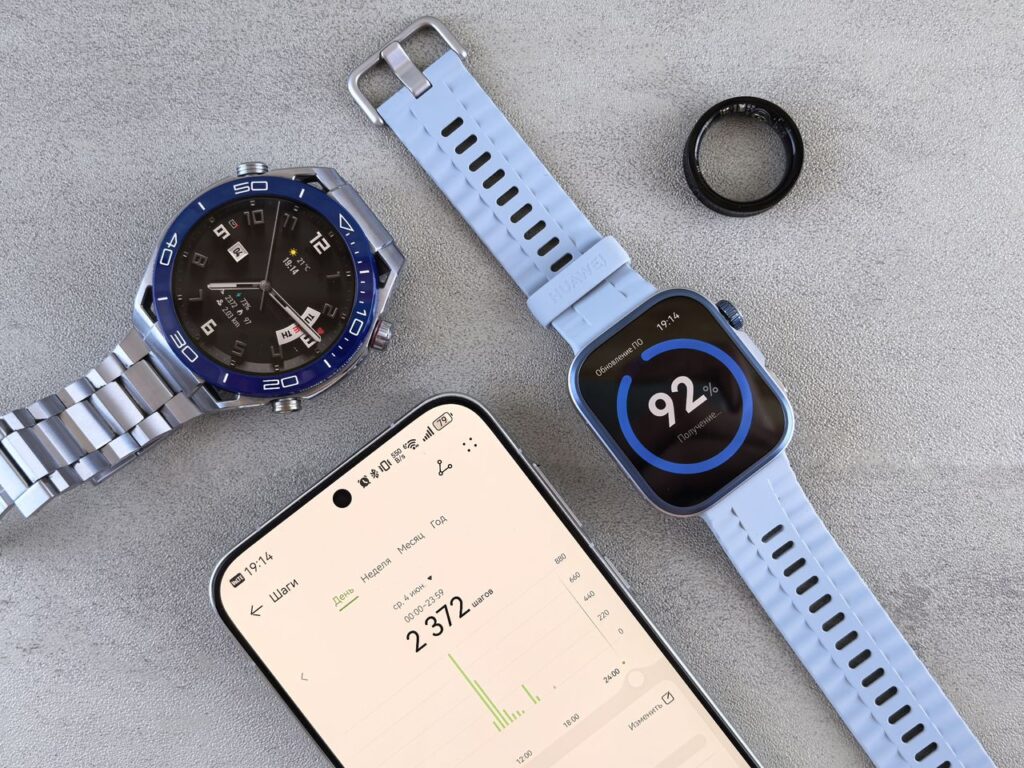
Battery Life: The Feature People Often Underestimate
A spectacular display and dozens of apps sound appealing—until you have to charge the watch every night.
Battery life can vary dramatically. Consumer Reports says wearable battery life can range from roughly one day to more than two weeks, depending on the device and how it is used, with GPS among the features that can consume significant power. Consumer Reports
This creates an important trade-off:
More functionality often means more charging.
Consider two hypothetical users.
Alex, a casual walker, wants continuous sleep and activity tracking. A tracker that lasts a week or longer may be ideal.
Sam, a marathon trainee, wants GPS, music, notifications, maps and workout analytics. Sam may willingly accept more frequent charging in exchange for those capabilities.
Neither choice is objectively better. The right choice is the one that fits the user’s routine.
Don’t Buy Based on Health Features Alone
Wearables have become impressive health-monitoring tools, but shoppers should understand what their numbers actually mean.
A 2026 review of consumer smartwatch technology concluded that many wearable outputs are estimates generated from sensor data and algorithms rather than direct physiological measurements. Accuracy can vary by device, algorithm, person and activity, and the researchers recommend using wearable data primarily to understand trends rather than treating every measurement as a precise medical result. PubMed
That’s an important distinction.
For example, a watch might tell you that you burned 650 calories. That doesn’t mean your body actually burned exactly 650 calories. Similarly, a sleep score should generally be viewed as a useful trend indicator rather than a definitive medical assessment.
Heart-rate data can be particularly useful
Research is more encouraging for some measurements than others. A 2026 study comparing Apple, Galaxy, Fitbit and Garmin smartwatches with ECG found strong agreement for heart-rate measurements during exercise, while energy-expenditure estimates were substantially less reliable—particularly during resistance exercise. PubMed
The practical lesson is simple:
Use wearable data to guide habits, not to create false precision.
If your watch consistently shows that your resting heart rate or workout heart rate is changing over time, that trend can be useful. But don’t assume every number displayed on the screen is laboratory-grade.
Compatibility Should Be Your First Shopping Check
Before comparing screens, sensors or straps, check whether the device works properly with your smartphone.
This is one of the easiest mistakes to make.
Consumer Reports notes that Apple Watches work with iPhones, while Samsung and Google smartwatches are designed primarily around Android ecosystems. Compatibility can determine whether you get the full functionality you paid for. Consumer Reports
So before purchasing:
- Check your phone’s operating system.
- Confirm the wearable is compatible.
- Check whether important features require a specific phone brand.
- Verify whether cellular service requires an additional plan.
- Check whether the companion app supports your phone.
A $400 smartwatch that doesn’t work properly with your phone is a much worse deal than a $150 tracker that does everything you need.
Comfort Is More Important Than It Sounds
A wearable is only useful if you actually wear it.
A large, heavy watch might look impressive in a store but become annoying during sleep or exercise. Conversely, a small tracker may disappear comfortably on your wrist.
Fit can also affect sensor performance. Consumer Reports specifically notes that a strap that is too loose or too tight can interfere with heart-rate readings. Consumer Reports
When shopping, consider:
- Weight
- Case size
- Strap material
- Screen size
- Comfort during sleep
- Comfort during exercise
- Water resistance
- Ease of charging
If possible, physically try the device before buying it.
Price: Spend Money on Features You’ll Actually Use
A common electronics-buying mistake is paying for specifications rather than solving a problem.
A premium smartwatch might provide advanced sensors, cellular connectivity, a large display and extensive apps. But if you only want step and sleep tracking, those features could represent wasted money.
On the other hand, buying the cheapest tracker and later discovering that you need built-in GPS, music controls or advanced workout features can also be expensive in the long run.
A better strategy is to create a must-have list before shopping.
If your must-haves are:
Steps + sleep + heart rate:
Choose a fitness tracker.
Workouts + GPS + longer battery life:
Consider an advanced fitness tracker or fitness-focused smartwatch.
Calls + messages + apps + fitness:
Choose a smartwatch.
Leaving your phone behind:
Look for a smartwatch with cellular connectivity.
Maximum battery life:
Favor a fitness tracker or a smartwatch designed around endurance.
A Simple Decision Rule
Here’s a useful shortcut:
If fitness is the reason you’re buying the device, start with a fitness tracker. If your phone is the reason you’re buying it, start with a smartwatch.
There’s plenty of overlap, but this rule eliminates much of the confusion.
Think of a fitness tracker as a health-and-activity instrument that happens to be worn on your wrist.
Think of a smartwatch as a smartphone companion that happens to include sophisticated fitness capabilities.
The Bottom Line
There is no universal winner in the smartwatch vs. fitness tracker debate.
Buy a fitness tracker if you want simplicity, lower cost, discreet design and longer battery life.
Buy a smartwatch if you want communication, apps, navigation, payments and a broader smartphone experience alongside fitness tracking.
And don’t get distracted by a long specification sheet. The best wearable is the one whose features match your daily routine—and that you will actually wear consistently.
Before buying, compare phone compatibility, battery life, comfort, GPS, health features, app support, water resistance and total cost. Most importantly, decide which three features you will genuinely use every week.
Once you know that, choosing between a smartwatch and a fitness tracker becomes much easier.
Ready to buy? Start by writing down your three must-have features, set your budget, check smartphone compatibility, and then compare only the devices that meet those requirements.