

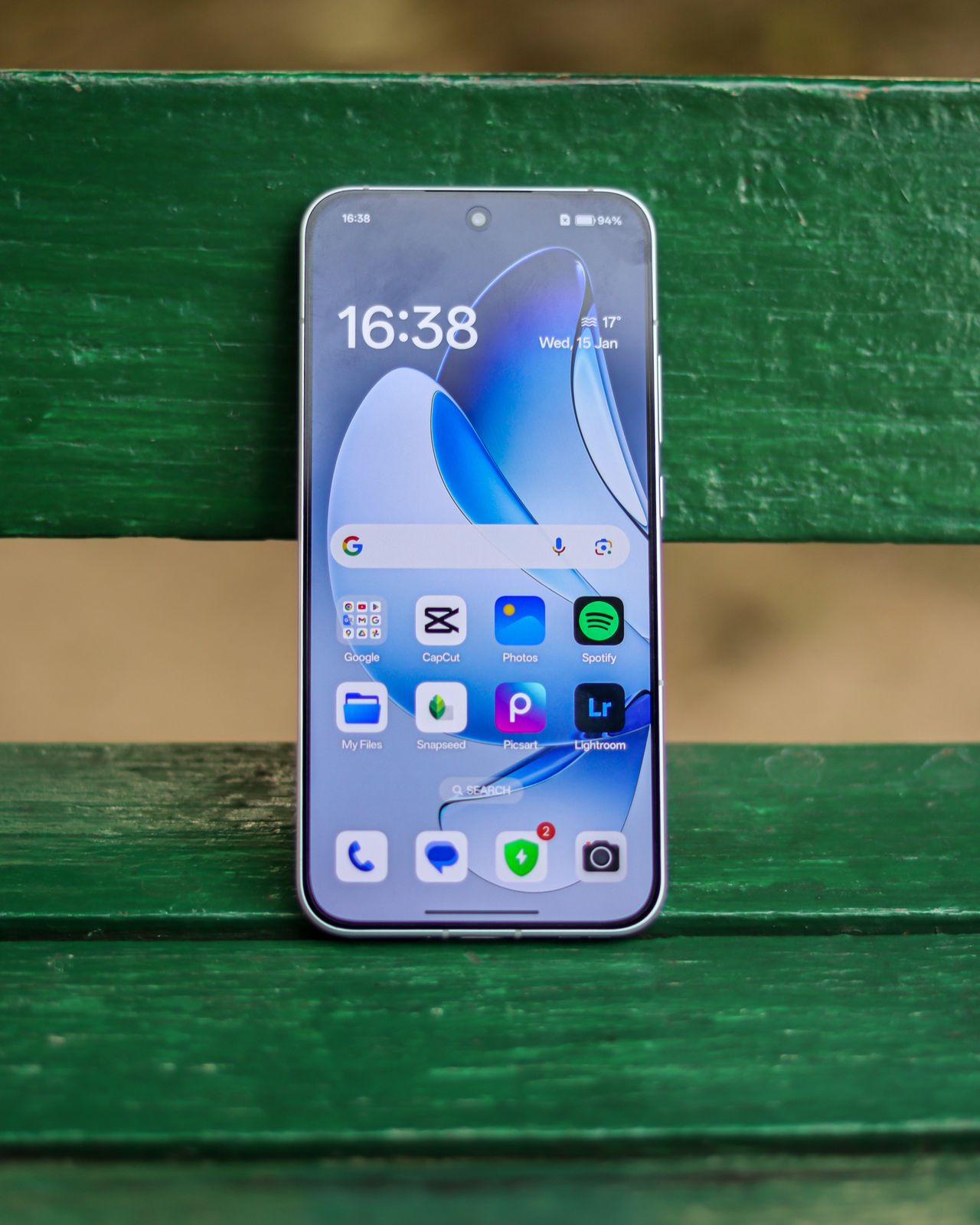
Google Pixel 10 Pro XL Review: The Smartest Phone Ever?
Google Pixel 10 Pro XL Review: Google’s Ultimate Vision for Mobile AI
Table of Contents
Google’s smartphone lineup has evolved significantly over the years, culminating in the Google Pixel 10 Pro XL ($1,199). As the largest and most premium offering in the current Pixel generation, this flagship model represents a substantial leap forward. Rather than relying on raw muscle alone, it leans heavily into sophisticated, hardware-integrated machine learning. Fueled by an entirely new architecture via the Tensor G5 chip, the Pixel 10 Pro XL aims to change our expectations of what a smartphone can actually do.
The Bottom Line
The Google Pixel 10 Pro XL combines a highly refined industrial design with next-generation AI functionalities like real-time phone translation and conversational photo editing. It provides an deeply engaging, forward-looking Android experience.
- Starting Price: $1,199.00
- Editor Rating: 4.0/5 (Excellent)
Pros & Cons
- + Premium, ergonomic chassis design
- + Cutting-edge local AI productivity features
- + Magnificent, highly accurate triple-camera system
- + Live, two-way Voice Translate is an absolute showstopper
- + Integrated Pixelsnap magnetic charging functionality
- – Significant weight makes it noticeably heavy to hold over long periods
- – North American retail models completely abandon the physical SIM slot
Technical Specifications Overview
- Operating System: Android 16 (with a guaranteed 7 years of full support)
- Processor: Google Tensor G5 (Built on TSMC 3nm process)
- RAM: 16GB
- Storage Capacities: 256GB ($1,199) / 512GB ($1,319) / 1TB ($1,549)
- Display: 6.8-inch LTPO OLED (2992 x 1344 pixels), variable 1Hz–120Hz
- Peak Outdoor Brightness: 3,300 nits
- Chassis Dimensions: 6.41 x 3.02 x 0.33 inches
- Total Weight: 8.18 ounces
- Durability Certification: IP68 Dust and Water Resistance
Industrial Design: Subtle Refinements to a Solid Foundation
Visually, the Pixel 10 Pro XL shares a clear lineage with the previous generation, but Google has focused heavily on ergonomics. The frame transitions more seamlessly into the glass panels, and the aluminum edges are noticeably rounder, making the phone feel much softer in the hand.
The build materials are uncompromising: Corning Gorilla Glass Victus 2 covers both the display and the matte-textured back glass. The matte rear finish excels at hiding smudges, contrasting sharply with the highly polished, glossy aluminum sides.
However, at 8.18 ounces, this device has a distinct physical presence. The added heft makes it heavier than the previous model, matching the footprint of the Samsung Galaxy S25 Ultra (7.69 ounces) and the Apple iPhone 16 Pro Max (7.99 ounces) while being slightly denser than both.
Functional Elements and Layout
- Buttons: The right-hand rail houses a highly tactile power key and a unified volume rocker.
- Connectivity and Ports: The bottom edge hosts dual stereo speakers alongside a high-speed USB-C 3.2 port.
- Biometrics: A swift, highly accurate under-display ultrasonic fingerprint sensor is paired with a secure Face Unlock system. Crucially, Google remains one of the few Android manufacturers offering biometric facial authentication secure enough for banking apps.
- Color Profile: Available in a neutral palette of Jade, Moonstone, Obsidian, or Porcelain.
eSIM Transition: Much like the standard model, the US retail variants have completely removed the physical SIM card tray. Users are required to configure up to two active digital eSIMs.
Display: Outshining the Competition
The center of the experience is the massive 6.8-inch LTPO OLED panel. Google has pushed the display boundaries further this year, raising the maximum brightness to an extraordinary 3,300 nits at its peak (and 2,200 nits during HDR playback). This obliterates ambient glare entirely, allowing you to easily frame a shot or read dense text under direct midday sunlight.
The panel relies on a highly dynamic variable refresh rate, adjusting on the fly between 1Hz and 120Hz to preserve battery performance during static screens. By default, the software scales the interface resolution to a crisp 2404 x 1080 pixels out of the box, but you can manually toggle it to its native 2992 x 1344 resolution within the system settings for absolute clarity.
Performance: A Deep-Tier Hardware Evolution
The defining change in the Pixel 10 series lies hidden within the silicon. For years, Google’s Tensor chips were heavily derived from Samsung’s architecture. With the Tensor G5, Google officially jumped ship to TSMC, manufacturing a custom processor from scratch on a state-of-the-art 3nm process node. This layout introduces dedicated, custom-tailored blocks for the Tensor Processing Unit (TPU), the Graphics Processing Unit (GPU), and the Image Signal Processor (ISP), prioritizing low latency and local machine-learning execution.
Hardware Performance Deep Dive
| Benchmark Test | Google Pixel 10 Pro XL | Google Pixel 9 Pro XL | Samsung Galaxy S25 Ultra | Apple iPhone 16 Pro Max |
| Geekbench 6 (Single-Core) | 2,340 | 1,677 | 3,121 | 3,312 |
| Geekbench 6 (Multi-Core) | 6,430 | 4,100 | 9,937 | 8,086 |
| PCMark Work 3.0 | 15,722 | 17,847 | 20,502 | N/A |
| GFXBench Aztec (FPS) | 75 | 43 | 86 | 59 |
The benchmark results tell a fascinating story. The Tensor G5 delivers a massive leap over the previous model, particularly in graphics rendering (leaping from 43 to 75 fps). However, if you are looking for absolute raw computing muscle, Samsung’s Snapdragon platform and Apple’s A-series silicon still command a significant lead.
Yet, real-world utility paints a very different picture. The massive 16GB allocation of high-speed RAM means applications stay frozen in memory indefinitely without stuttering, and heavy multitasking is instantaneous. Intensive 3D games like Asphalt Legends run with fluid frame pacing at high graphic configurations. While the phone’s backplate warms up slightly near the camera island under heavy graphic loads, it never gets uncomfortably hot.
Battery Longevity and Pixelsnap Ecosystem
To feed the larger footprint, Google upgraded the internal power cells to a 5,200mAh capacity. In video loop testing at maximum brightness, the Pixel 10 Pro XL managed 12 hours and 35 minutes. This marks a mild improvement over the previous generation, but it cannot quite match the longevity of the Galaxy S25 Ultra (14 hours, 15 minutes) or the phenomenal endurance of the iPhone 16 Pro Max (22 hours, 5 minutes).
Fortunately, wired charging speeds top out at a fast 45W, jumping from a completely drained state to 54% capacity in 30 minutes, with a full top-off taking roughly 90 minutes.
The Pixelsnap Addition
This generation marks the premiere of Pixelsnap, an integrated alignment ring built directly into the rear glass. It acts as an open invitation to the magnetic accessory ecosystem, working flawlessly with both Google’s native chargers and third-party MagSafe accessories. Wireless charging speeds top out at a respectable 25W.
Audio Fidelity and Call Performance
The audio output from the main speaker system is impressively loud, peaking at 93.4dB during media playback. Unlike typical smartphone configurations where the low-end feels thin, the dual stereo drivers here capture the deeper bass thuds of tracks like Silent Shout with a surprising amount of resonance. Call clarity is similarly excellent, with the microphone system effectively masking background traffic noise and ambient voices during outdoor phone calls.
Cameras: Elite Mobile Photography
While the underlying camera hardware looks identical to the previous generation, the real improvements stem from Google’s rewritten image processing pipelines.
- Primary Sensor: 50MP, f/1.68 aperture with native Optical Image Stabilization (OIS)
- Ultra-Wide Sensor: 48MP, f/1.7 aperture with an ultra-wide 123-degree Field of View (FoV)
- Telephoto Sensor: 48MP, f/2.8 aperture capable of 5x true optical zoom and OIS
The resulting photos are gorgeous. Rather than artificially over-brightening low-light areas like older models, the Pixel 10 Pro XL preserves realistic shadow levels, lending images a cinematic depth. Colors feel richly saturated yet accurate to life.
100x Pro Res Zoom
Users can opt to download an on-device AI model that unlocks a hybrid 100x Pro Res Zoom. At extreme distances, the 5x optical lens cannot capture fine text details natively, so the system uses generative AI algorithms to reconstruct edges and textures. The results can be hit-or-miss; while geometric shapes look clean, alphanumeric characters at extreme distances sometimes look artificially smoothed over or slightly garbled.
Low-Light Performance & Video
Night Sight remains an absolute industry standard, pulling vibrant colors out of near-total darkness, though users must hold the phone steady for three seconds while the sensor gathers data.
On the video front, local recording tops out at 4K at 60fps. However, if you enable Google’s cloud-based Video Boost, the phone records a high-bitrate stream and uploads it to Google Photos. The remote servers then process the clip to export an incredibly vibrant, clean 8K resolution video at 30fps. The only drawback? The processing pipeline is slow; a short 48-second video can take several hours to complete its cloud round-trip.
Software: A Massive Leap in Conversational AI
Shipping with Android 16 and utilizing the highly customizable Material 3 Expressive interface, the Pixel 10 Pro XL comes with a massive seven-year software update guarantee. Google’s software ecosystem introduces several unique AI tools that run entirely on-device:
- Voice Translate: The absolute crown jewel of Call Assist. Once you download the respective language modules, the phone handles bidirectional voice translation mid-call. If you call someone who speaks French, the phone translates your English words into French, synthesizing your exact vocal tone and inflections. When they reply, their voice is translated back to English for you in real time. It is an extraordinary feature, though the inherent lag required to parse and process sentences can make the conversation flow a little deliberate.
- Magic Cue: A context-aware assistant that silently synthesizes local data from your Calendar, Messages, and Gmail. If you phone a business or an airline, a card automatically populates your screen containing your flight reference numbers, exact appointment windows, or addresses discussed in previous text threads without you needing to lift a finger.
- Pixel Studio & Photo Tools: Auto Best Take instantly fixes group photographs by pulling smiling expressions from alternative exposures. Furthermore, the updated editing tools let you adjust photos using natural language. You can select an image of yourself and type, “Replace the background with a dumpster fire and put me in a custom black suit,” and the AI will alter the shot, even reflecting realistic red light casting off the digital fire onto your clothing.
Final Thoughts
The Google Pixel 10 Pro XL represents a massive achievement in software and hardware integration. While competitors like the Samsung Galaxy S25 Ultra offer slightly better battery endurance and raw gaming horsepower, Google has built a phone that feels distinct, responsive, and genuinely helpful.
The advanced TSMC-built Tensor G5 silicon handles heavy data processing locally, making features like real-time phone translation and conversational photo editing look effortless. If you want a pocketable look at the future of mobile intelligence, the Pixel 10 Pro XL is as smart as it gets.