
HTC U24 Pro smartphone review – Modern and yet out of date
Table of Contents
For tech enthusiasts who remember the golden age of Android, the name HTC carries immense sentimental weight. Once an undisputed pioneer responsible for iconic design breakthroughs and custom software innovations, the Taiwanese brand has largely stepped back from the flagship smartphone arena. However, HTC hasn’t completely abandoned mobile hardware.
Entering the upper mid-range segment for 2024–2025 is the HTC U24 Pro. Priced at approximately €549 (~$608 USD), this device attempts to bridge two distinct eras: it pairs modern aesthetic trends—like a curved OLED display and a high-refresh-rate panel—with traditional features that mainstream flagships abandoned years ago, such as a 3.5 mm headphone jack, an integrated microSD expansion slot, and a hardware notification LED.
Does blending old-school practicality with mid-range processing power yield a triumphant return, or does the U24 Pro lag behind fierce modern competition from Xiaomi, Motorola, and Google? Below is our comprehensive analysis of the HTC U24 Pro.
1. Key Specifications
| Feature | Specification |
|---|---|
| Processor | Qualcomm Snapdragon 7 Gen 3 (1x 2.6 GHz Cortex-A715, 3x 2.4 GHz Cortex-A715, 4x 1.8 GHz Cortex-A510) |
| Graphics | Qualcomm Adreno 720 |
| RAM | 12 GB |
| Internal Storage | 256 GB UFS 3.1 (Expandable via microSD) |
| Display | 6.80-inch 20:9 OLED, 2436 x 1080 pixels (392 PPI), 120 Hz, Curved Corning Gorilla Glass |
| Main Camera | 50 MP Main + 50 MP Telephoto (2x optical zoom) + 8 MP Ultra-Wide |
| Front Camera | 50 MP |
| Battery & Charging | 4,600 mAh; 60W Wired Charging, 15W Wireless Charging, 5W Reverse Wireless |
| Connectivity | Wi-Fi 6E (6 GHz supported), 5G / 4G LTE, Bluetooth, USB 3.0 Type-C (up to 5 Gbit/s) |
| Legacy Features | 3.5 mm Audio Port, Multi-color Notification LED, MicroSD Card Reader |
| Durability & Build | IP67 Dust and Water Resistance; Aluminum Frame, Sandblasted Glass Back; 199 grams |
| Dimensions | 167.1 x 74.9 x 9.0 mm |
| Operating System | Android 14 |
2. Design, Ergonomics, and Build Quality
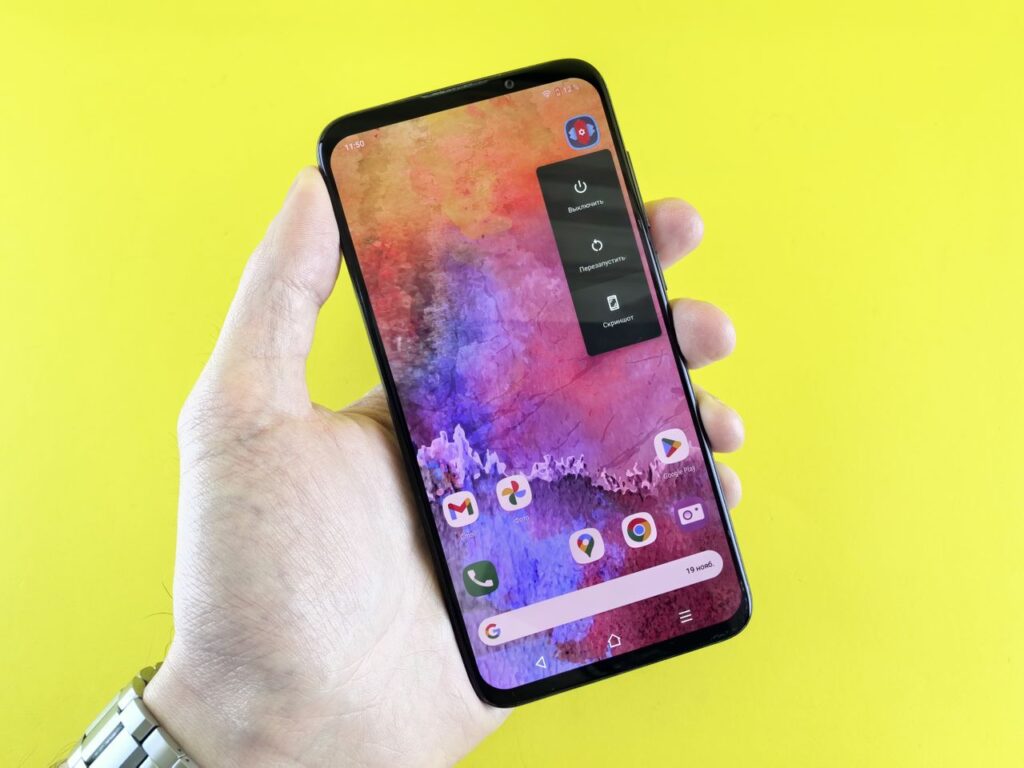
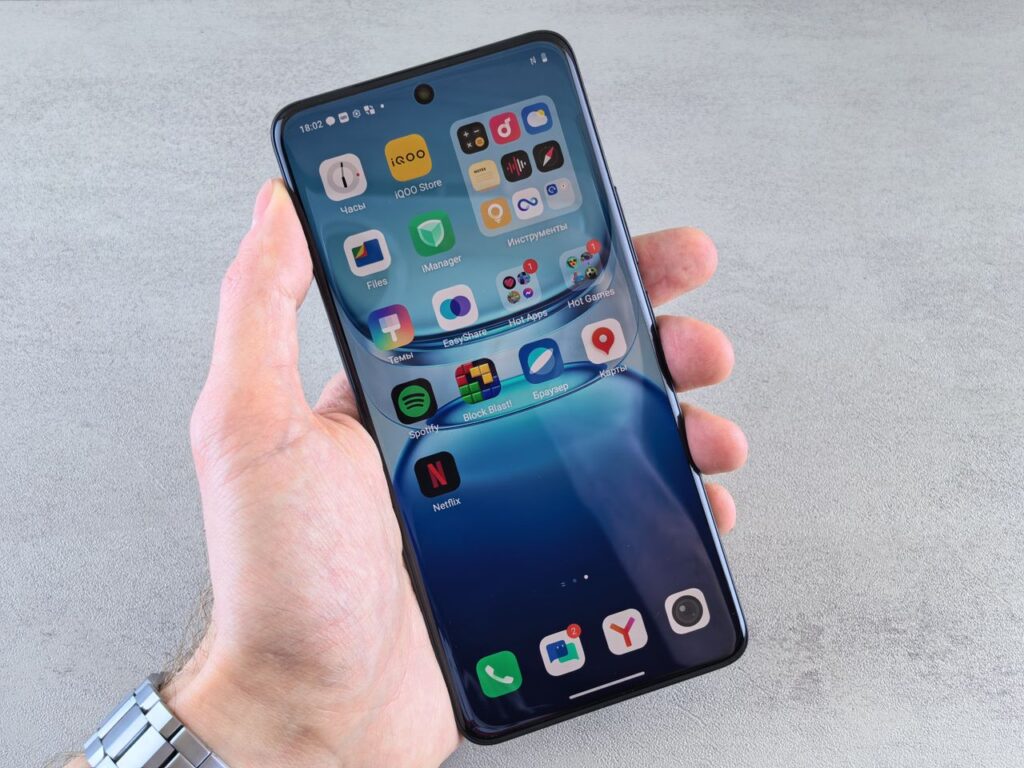
The HTC U24 Pro shows significant physical evolution over its predecessor, the U23 Pro. The design features curved glass extending over the side edges, accompanied by ultra-narrow top and bottom bezels.
The rear panel undergoes a multi-stage manufacturing process involving sandblasting, sanding, and heat compression. This treatment gives the matte backplate a light-refracting shimmer, particularly on the Space Navy / Dark Blue colorway available in Europe (a beige variant is available internationally).
+-------------------------------------------------------------------+
|                     HTC U24 Pro - Key Angles                      |
|                                                                   |
|   [Front]                    [Back]                 [Edges]       |
|  .----------------.         .----------------.     .------------. |
|  |  [OLED 6.80"]  |         |  (o) Main 50MP |     | [Vol+/Vol-] | |
|  |  Curved Glass  |         |  (o) Tele 50MP |     | [Power Key]| |
|  |   120Hz Panel  |         |  (o) Wide 8MP  |     |            | |
|  |                |         |                |     | [3.5mm Jack| |
|  | (Notification) |         |  [Matte Finish]|     |  on top]   | |
|  '----------------'         '----------------'     '------------' |
+-------------------------------------------------------------------+
Despite its substantial 6.8-inch footprint, the device sits comfortably in the hand. The contoured aluminum frame creates a subtle tactile ridge that aids grip, and the total weight is kept under 200 grams (199 g / 7.02 oz). Furthermore, the chassis carries an IP67 rating, ensuring resistance against dust ingress and short submersion in shallow fresh water.
Forgotten Utility Features
- Notification LED: Located near the top front bezel, a dedicated multi-colored LED blinks for incoming notifications and charging status—allowing status checks at a glance without activating the display.
- Analog Audio: The inclusion of a 3.5 mm headphone jack provides zero-latency wired audio monitoring without requiring USB-C dongles.
- Storage Expansion: While equipped with a dual Nano-SIM slot, one slot functions as a hybrid bay accepting microSD cards. In benchmark evaluations with an Angelbird V60 reference card, read and write speeds hovered around 29.9 to 32.5 MB/s, which is modest but adequate for media offloading.
3. Display Performance & Visual Experience
The front panel is dominated by a 6.80-inch OLED display running at a resolution of 2436 x 1080 pixels (392 PPI) with a 120 Hz refresh rate.
While the display offers deep contrast and fast response times (2.6 ms 50% to 80% Grey transitions), it suffers from lower peak luminance compared to mid-range competitors.
MAXIMUM DISPLAY BRIGHTNESS (cd/m²)
------------------------------------------------------------------
Google Pixel 8a       | [====================================] 1518
Motorola Edge 50 Pro  | [========================] 1064
Xiaomi Poco F6        | [========================] 1031
HTC U24 Pro           | [==============] 630
------------------------------------------------------------------
Display Analysis
- Outdoor Visibility: With a maximum measured brightness of 630 cd/m², reading the screen under harsh sunlight or displaying dynamic HDR content can be challenging. Competitors in the same price tier frequently exceed 1,000 to 1,500 cd/m².
- Color Accuracy: Factory calibration leans cool out of the box, introducing a noticeable blue tint. On-board software lacks granular color-profile controls to completely calibrate this out.
- Pulse-Width Modulation (PWM): The OLED panel utilizes Pulse-Width Modulation for brightness regulation at a frequency of 288.2 Hz with a 22% amplitude fluctuation. While reasonably high, users sensitive to screen flicker should take note.
4. Hardware Performance, Benchmarks, and Cooling
Powering the HTC U24 Pro is Qualcomm’s Snapdragon 7 Gen 3 built on a 4nm process, paired with an Adreno 720 GPU and 12 GB of LPDDR5 RAM. Storage is supplied via 256 GB of UFS 3.1 flash storage, yielding fast sequential read speeds of 2036.9 MB/s and write speeds of 1780.7 MB/s.
CPU Benchmark Overview
In synthetic testing, the Snapdragon 7 Gen 3 delivers standard mid-range results. However, it trails competing platforms using flagship-grade or higher-tier silicon, such as the Snapdragon 8s Gen 3 inside the Xiaomi Poco F6 or the Google Tensor G3 inside the Pixel 8a.
GEEKBENCH 6.7 SINGLE-CORE
------------------------------------------------------------------
Xiaomi Poco F6 (SD 8s Gen 3)    | [=======================] 1930
Google Pixel 8a (Tensor G3)     | [====================] 1699
HTC U24 Pro (SD 7 Gen 3)        | [==============] 1195
Motorola Edge 50 Pro (SD 7G3)   | [==============] 1147
HMD Skyline (SD 7s Gen 2)       | [===========] 957

GEEKBENCH 6.7 MULTI-CORE
------------------------------------------------------------------
Xiaomi Poco F6 (SD 8s Gen 3)    | [=======================] 4876
Google Pixel 8a (Tensor G3)     | [=====================] 4408
HTC U24 Pro (SD 7 Gen 3)        | [================] 3410
Motorola Edge 50 Pro (SD 7G3)   | [===============] 3129
HMD Skyline (SD 7s Gen 2)       | [============] 2821
------------------------------------------------------------------
Real-World Performance & Thermal Behavior
- Daily Multitasking & Gaming: Despite moderate benchmark figures, system operations remain fluid. Navigation through Android 14, web browsing, and multi-app switching run smoothly. Titles like Genshin Impact or Call of Duty: Mobile run well at medium-to-high graphical settings.
- Thermal Management: Extended stress testing (such as 20 consecutive runs of the 3DMark Wild Life benchmark) reveals effective thermal dissipation. Peak surface temperatures hit 44.5 °C (112.1 °F) under full sustained load without severe thermal throttling.
5. Camera System Evaluation
HTC revamped the triple-rear camera module on the U24 Pro, replacing the high-resolution, low-utility setup of its predecessor with a more versatile hardware layout:
- Primary Sensor: 50 MP, f/1.9 aperture, Optical Image Stabilization (OIS).
- Telephoto Sensor: 50 MP, 2x Optical Zoom lens.
- Ultra-Wide Sensor: 8 MP, 120-degree field of view.
- Front Camera: 50 MP with autofocus.
+-------------------------------------------------------------------+
|                   HTC U24 Pro Rear Camera Layout                  |
|                                                                   |
|       +---------------------------------------------------+       |
|       | [ 50 MP Main ]  - OIS, 4K30 Video capture         |       |
|       | [ 50 MP Tele ]  - 2x Optical magnification        |       |
|       | [ 8 MP Wide ]  - Ultra-wide landscape framing     |       |
|       +---------------------------------------------------+       |
+-------------------------------------------------------------------+
Image Quality Breakdown
- Main & Telephoto Performance: The primary 50 MP sensor captures saturated, high-contrast imagery in bright daylight. Close-up macro shots exhibit subject isolation with natural background bokeh. However, fine details—such as foliage or distant architectural textures—can suffer from soft processing and minor motion blur.
- Low-Light & Dynamic Range: When shooting under high contrast or night conditions, the camera processing struggles to retain detail across deep shadows and bright highlights, occasionally leading to blown-out light sources or grainy dark patches.
- Video Capabilities: Video recording tops out at 4K at 30 fps via the main sensor. The autofocus responds quickly when tracking moving subjects, though automated exposure adjustments can exhibit minor stepping delays when panning across variable light environments.
6. Software, Connectivity, and Battery Life
Software Interface & Quirks
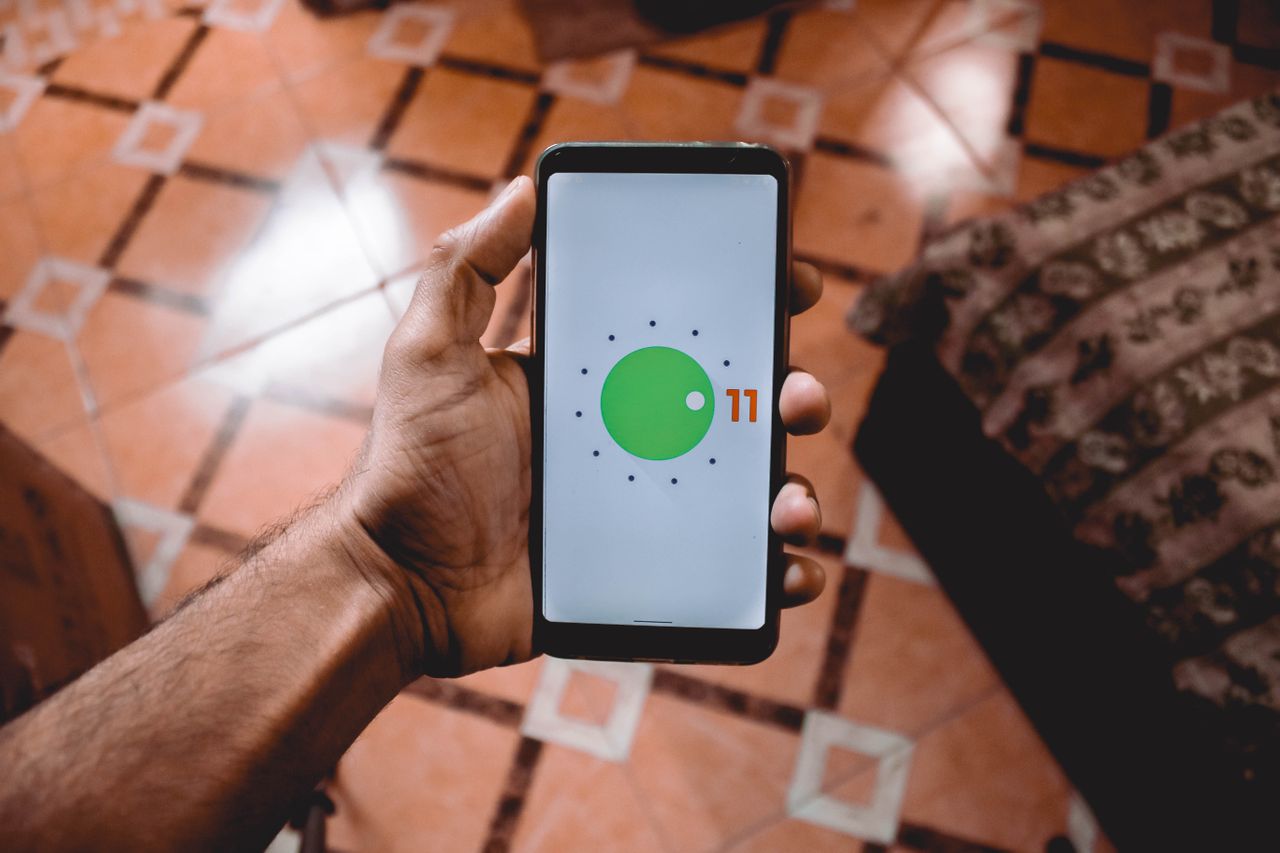
The smartphone ships with Android 14. While the UI offers a near-stock experience, localized UI elements and icon configurations mirror HTC Sense interfaces from older Android iterations.
Software support is an area where the device trails behind current industry trends: HTC has not committed to a multi-year OS update guarantee for the U24 Pro, leaving its long-term update path unclear compared to rivals offering up to 5–7 years of support.
Security patches during evaluation exhibited unusual anomalies (such as displaying post-dated patch versions during testing), pointing to software maintenance inconsistencies that HTC will need to address in retail updates.
Biometrics & Networking
- Fingerprint & Face Unlock: An optical fingerprint reader resides under the OLED glass. While accurate during active use, the device requires the lock screen to be manually waked or brought up via Always-On-Display before the sensor accepts input.
- Wi-Fi 6E Performance: Equipped with Wi-Fi 6E, the phone connects to 6 GHz networks. Downlink speeds top out around 898–932 MBit/s, allowing full saturation of a standard gigabit broadband link.
WI-FI 6E RECEIVE SPEED (MBit/s)
------------------------------------------------------------------
Motorola Edge 50 Pro  | [====================================] 1081
HMD Skyline           | [==============================]] 909
HTC U24 Pro           | [==============================] 898
Google Pixel 8a       | [========================] 754
------------------------------------------------------------------
Battery Life & Charging Speeds
The integrated 4,600 mAh battery achieved 15 hours and 3 minutes in standardized Wi-Fi browsing tests (at a normalized 150 nits display brightness), providing solid all-day endurance for typical mixed usage.
+-------------------------------------------------------------------+
|                        Charging Versatility                       |
|                                                                   |
|   [ 60W Wired ]         [ 15W Wireless ]      [ 5W Reverse ]      |
|   Fast Top-Ups          Qi Charging Pads      Accessories / Buds  |
|   (Adapter optional)                                              |
+-------------------------------------------------------------------+- Wired Charging: Supports up to 60W fast charging (note: a compatible high-wattage power adapter is not included in the retail box).
- Wireless Capabilities: Features 15W Qi wireless charging and 5W reverse wireless charging for topping up wireless earbuds or peripheral accessories on the go.
7. Pros and Cons
Pros
- Tactile & Ergonomic Build: Lightweight 199g frame, curved Gorilla Glass front, and shimmering matte rear casing with IP67 protection.
- Legacy Port Selection: Retains an analog 3.5 mm headphone port, microSD expansion slot, and a multi-color hardware Notification LED.
- Flexible Camera Array: Dedicated 50 MP telephoto lens provides true 2x optical zoom, avoiding purely crop-based digital zoom.
- Versatile Power Options: 60W wired charging paired with 15W wireless and 5W reverse wireless charging capabilities.
- Good Battery Efficiency: Over 15 hours of continuous Wi-Fi usage on a single charge.
Cons
- Below-Average Display Brightness: Peak output of 630 cd/m² limits outdoor sunlight readability and HDR performance.
- Unclear Software Support: Lack of a guaranteed multi-year OS update commitment.
- Inconsistent Image Sharpness: Processing software often applies overly aggressive smoothing, leading to soft fine details in complex scenes.
- Ergonomic Biometric Steps: Under-display fingerprint reader requires waking the lock screen before scanning.
- Tough Price-to-Performance Ratio: Faces stiff competition from mid-range rivals offering higher-tier processors and brighter panels at or below the €549 price point.
8. Competitor Comparison
+-------------------------------------------------------------------------------------------------+
|                               Upper Mid-Range Comparison Matrix                                |
+---------------------+-------------------+-------------------+-------------------+---------------+
| Specification       | HTC U24 Pro       | Xiaomi Poco F6    | Motorola Edge 50  | Google Pixel  |
|                     |                   |                   | Pro               | 8a            |
+---------------------+-------------------+-------------------+-------------------+---------------+
| Price (MSRP)        | ~€549             | ~€500             | ~€550             | ~€549         |
| SoC                 | Snapdragon 7 Gen 3| SD 8s Gen 3       | Snapdragon 7 Gen 3| Tensor G3     |
| Display Brightness  | 630 cd/m²         | 1031 cd/m²        | 1064 cd/m²        | 1518 cd/m²    |
| Telephoto Lens      | Yes (50 MP)       | No                | Yes (10 MP)       | No            |
| Headphone Jack      | Yes               | No                | No                | No            |
| MicroSD Slot        | Yes               | No                | No                | No            |
| Notification LED    | Yes               | No                | No                | No            |
| Software Commitment | Unspecified       | 3 OS / 4 Yrs Sec  | 3 OS / 4 Yrs Sec  | 7 Years Full  |
+---------------------+-------------------+-------------------+-------------------+---------------+
9. Who Is This For?
The HTC U24 Pro occupies a specialized niche in the modern smartphone ecosystem:
- Hardware Traditionalists: Enthusiasts who decline to compromise on hardware features like the 3.5 mm headphone jack, microSD expansion, and a visible notification LED.
- HTC Brand Loyalty: Users looking for a sleek, IP67-rated phone with a curved display that stands out visually from common market options.
- Audio & Peripheral Users: Consumers who frequently use wired studio headphones or require local offline storage expansion for expansive music and media libraries.
Who should look elsewhere? Mobile gamers seeking raw processing performance (who may prefer the Xiaomi Poco F6) or users prioritizing bright displays and long-term software support (who may lean toward the Google Pixel 8a or Motorola Edge 50 Pro).
10. Final Verdict
The HTC U24 Pro is a unique upper mid-range offering. HTC successfully combines a sleek modern chassis, IP67 durability, 120 Hz curved OLED panel, and flexible camera setup with hardware features that many legacy smartphone fans miss—most notably the 3.5 mm headphone jack, microSD card expansion, and a hardware notification LED.
However, at its €549 price point, it faces tough competition. The screen’s 630 cd/m² peak brightness falls behind modern competitors, processing power lags behind performance-focused mid-rangers, and the lack of a defined software update policy makes it harder to recommend for longevity.
For users who specifically value its hardware features and classic design touches, the HTC U24 Pro offers a nostalgic yet capable modern Android experience.