


Motorola Razr Ultra Review: The Longest-Lasting Flip Phone
Motorola Razr Ultra In-Depth Review: The New Clamshell Endurance King
Table of Contents
Foldable smartphones have spent years trying to balance pocketable novelty with actual practical longevity. The Motorola Razr Ultra tackles this dilemma head-on. By merging a classic, nostalgic form factor with heavy-duty internal specifications, it sets a brand new battery benchmark for clamshell designs. While it doesn’t quite escape typical foldable traps—namely average camera hardware and uninspired AI—it stands tall as an incredibly capable alternative to mainstream competitors like the Samsung Galaxy Z Flip 6.
At a Glance
Our Verdict:
The Motorola Razr Ultra is a powerhouse clamshell that delivers exceptionally bright displays, top-tier computational performance, and historic battery life within a sleek, pocket-friendly package. It is slightly held back by pedestrian camera sensors, underbaked software tools, and a brief support lifespan, but it represents a massive leap forward for the flip phone genre.
| Pros | Cons |
| * Class-leading, record-breaking battery life | * Camera sharpness drops off in challenging lighting |
| * Exceptionally bright dual LTPS pOLED screens | * System AI utilities feel uninspired and buggy |
| * Cutting-edge Snapdragon 8 Elite performance | * Short 3-year OS update roadmap |
| * Pocketable and refined hardware layout | * Thermal throttling under extended graphic loads |
Design & Build: Re-engineered Comfort
- Closed Profile: 3.47 x 2.91 x 0.62 inches
- Open Profile: 6.75 x 2.91 x 0.28 inches
- Durability Rating: IP48 environmental seal
- Weight: 7.02 ounces
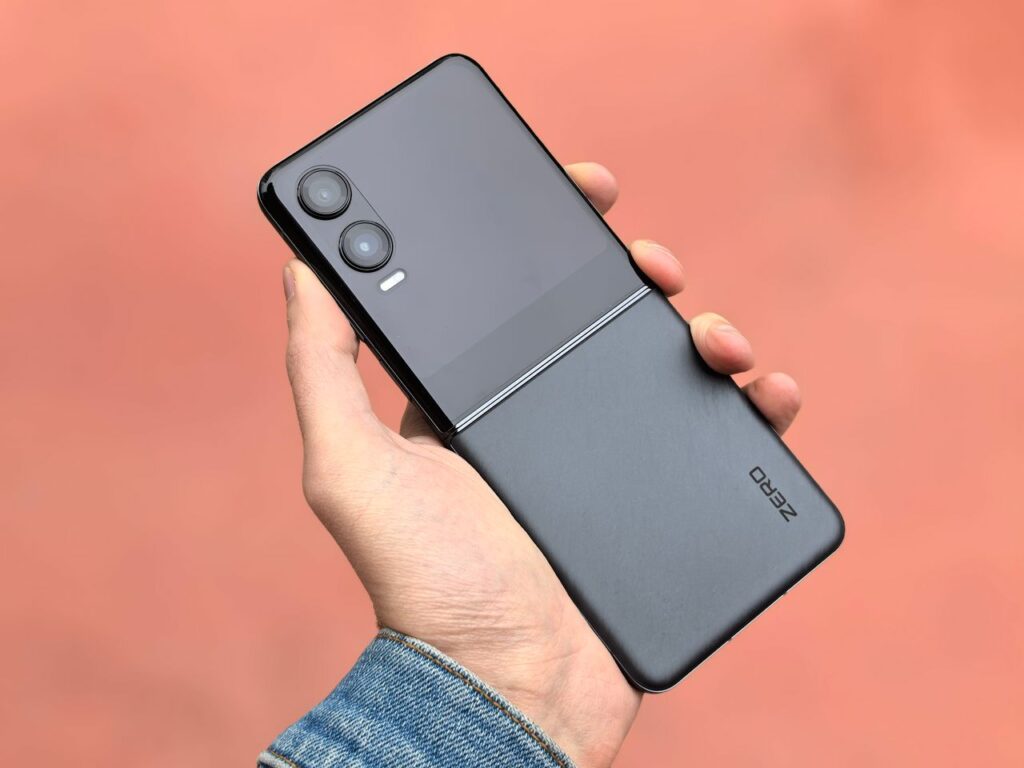
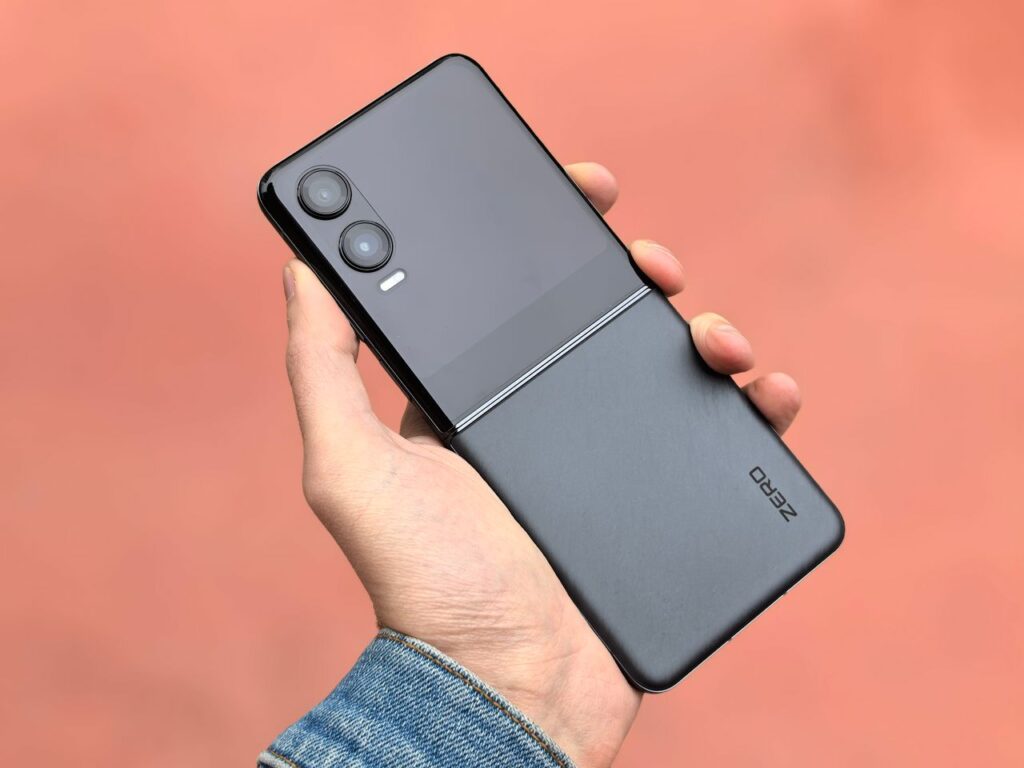
The Razr Ultra subtlely expands upon previous iterations, offering a taller, more substantial layout. It features a robust aluminum frame paired with a structural titanium hinge mechanism, resulting in a premium feel. The back is split beautifully along the spine: one half features a high-traction vegan leather texture (available in colorways like Rio Red, Cabaret pink, Mountain Trail wood, and Alcantara Scarab), while the other is completely dominated by the outer display.
The primary camera rings protrude directly from this external glass panel, with the interface flowing naturally around them. While the textured back prevents fingerprint smudges, the front glass is highly prone to oil marks, though it is heavily protected by scratch-resistant Gorilla Glass Ceramic.
Weight Comparison:
2025 Razr (Base):   ||||||||||||||| 6.63 oz
Galaxy Z Flip 6:    |||||||||||||||| 6.60 oz
Razr Ultra:         ||||||||||||||||| 7.02 oz
On the security side, an optical fingerprint reader is built directly into the side-mounted power button, working in tandem with snappy facial recognition. A dedicated hardware AI key sits on the left spine; while tactile and premium, its function is strictly limited to launching digital assistants and cannot be remapped to traditional shortcuts. Crucially, an upgraded IP48 certification ensures that the delicate internal hinge components are protected from small dirt particles and full freshwater submersion.
Display: Brighter and Bigger Dual Panels
The Razr Ultra’s screen real estate sets a high bar for content consumption:
- Outer Screen: 4.0-inch LTPS pOLED | 1272 x 1080 resolution (417 ppi) | 165Hz refresh rate
- Internal Screen: 7.0-inch LTPO pOLED | 2992 x 1224 resolution (464 ppi) | 165Hz variable refresh rate
The external panel handles everyday interactions brilliantly, reaching an outdoor-friendly peak brightness of 3,000 nits. This represents a substantial upgrade over the smaller panels found on basic clamshells, ensuring crisp readability in high ambient light.
Unfolding the handset exposes a massive 7.0-inch main canvas that tops out at an industry-leading 4,500 nits. Outdoor viewing under direct, harsh sunlight is effortless.
Crease Architecture: Motorola has minimized the central structural hinge indentation. The screen crease is completely imperceptible to the touch during active app navigation and is only visible when the display panel is entirely turned off.
The phone comes out of the box with a factory-applied screen protector. It integrates seamlessly into the bezel perimeter, though the system software will periodically ping you with cautionary notifications warning against its removal.
Specs & Performance: Elite-Tier Power with a Thermal Catch
Powering the device is Qualcomm’s flagship Snapdragon 8 Elite processor, supplemented by 16GB of RAM and 512GB of non-expandable on-board storage in its entry tier (with a 1TB model available for heavy media consumers). Day-to-day operations feel instantaneous. Apps move fluidly from the internal display to the external cover screen the moment the clamshell is shut, provided you grant the software cover-screen access permissions.
Geekbench 6 Multi-Core Performance:
2024 Razr+:       |||||||||| 4,648
Galaxy Z Flip 6:  ||||||||||||| 6,134
Razr Ultra:       |||||||||||||||||||| 8,727
Graphic performance is equally dominant. In the GFXBench Aztec Ruins test, the device maintained a blazing 80 fps, easily outpacing last generation’s foldables.
However, this raw power comes with thermal trade-offs. The ultra-slim chassis struggled to dissipate heat during sustained stress testing, causing initial benchmarking passes to force-close due to high temperatures. Extended sessions of Genshin Impact run at high frame rates, but the upper half of the vegan leather back panel gets noticeably warm to the touch after 30 minutes of continuous play.
Battery Life: Shattering Foldable Expectations
Historically, the Achilles’ heel of flip phones has been poor endurance due to split internal cells. The Razr Ultra rewrites this narrative with an expanded 4,700mAh battery capacity.
In standardized video-streaming longevity testing over Wi-Fi with maximum display output, the Razr Ultra achieved an unprecedented 22 hours and 3 minutes. This easily leaves the Galaxy Z Flip 6 (16 hours and 20 minutes) and older foldable designs in the dust, making it the longest-lasting flip phone on the market.
Battery Endurance Testing (Hours):
2024 Razr+:        |||||||||||||| 14.3h
Galaxy Z Flip 6:   ||||||||||||||||| 16.3h
Razr Ultra:        |||||||||||||||||||||||| 22.0h
Charging metrics are highly competitive, supporting 68W wired HyperCharge protocols alongside 30W wireless charging and 5W reverse wireless sharing. Utilizing a standard high-wattage laptop brick, the phone juices from empty to 100% in roughly 1 hour and 27 minutes. Note that a power adapter is not included in the box.
Connectivity & Audio
- Wireless Standards: Sub-6GHz & C-Band 5G | Wi-Fi 7 | Ultra-Wideband (UWB)
- Audio Setup: Dual stereo speakers with Dolby Atmos tuning
While it misses out on regional mmWave 5G nodes, its C-band reception is highly stable, maintaining fast data rates even in historically poor cellular coverage zones. The inclusion of Ultra-Wideband (UWB) is a massive bonus for tracking accessories and smart-home proximity keys.
Voice calls are clean and distinct, with the integrated earpiece pushing a clear 83.2dB and the speakerphone topping out at a loud 87.1dB. While the stereo separation is fine for video clips, the thin casing lacks lower-end depth, causing noticeable chassis vibration and anemic bass responses on heavier audio tracks.
Camera System: The Foldable Tax
The hardware utilizes three individual high-resolution sensors, all utilizing pixel-binning down to 12.6MP by default:
- Primary Sensor: 50MP ($f/1.8$) with Optical Image Stabilization (OIS)
- Ultrawide Sensor: 50MP ($f/2.0$) with a wide 122-degree field of view
- Internal Selfie Sensor: 50MP ($f/2.0$)
The primary shooter delivers satisfactory daylight results, capturing natural sky gradients and fine environmental details. However, consistency drops when switching to the 50MP ultrawide lens; images suffer from a prominent fish-eye distortion along the borders, alongside a drop-off in edge sharpness.
Macro & Crop Performance:
1x Main Shot:     |||||||||||||||||||| (Sharp, accurate exposure)
0.5x Ultrawide:   |||||||||||||| (Distorted frame edges)
Macro Focus:      ||||||||| (Soft detail, pixelation)
Low-light photography introduces noticeable digital noise, and the macro mode lacks fine-focus clarity. Fortunately, the clamshell design allows you to set the phone down half-folded, using the bright 4.0-inch external panel as a mirror to shoot high-quality selfies with the primary 50MP sensor. Video recording caps out at 8K at 30fps or 4K at 60fps, providing stable tracking but struggling with noise in darker environments.
Software & AI: Functional Cover, Weak Lifespan
The device ships with Android 15, but Motorola’s software update commitment remains a glaring weak point. The brand promises only three years of core operating system updates and four years of security patches. This trails far behind Samsung’s extensive seven-year commitment, which is disappointing for a premium $1,299 investment.
Conversely, the cover screen interface is excellent. Rather than limiting you to basic widgets, Motorola lets you run almost any standard Android application directly on the closed 4.0-inch display. You can reply to messages, browse photos, navigate via maps, or play full mobile titles without unfolding the device.
The custom Moto AI suite (integrated with Perplexity by default) feels undercooked. While utilities like “Catch Me Up” (notification summaries) and “Pay Attention” (voice transcription) are great on paper, the interface occasionally hangs or presents blank screens upon pressing the hardware AI button. Creative tools like Image Studio and custom playlist builders work fine, but they ultimately feel more like novel extras than essential workflow enhancements.
Final Thoughts
The Motorola Razr Ultra is a triumphant step forward for foldable durability and battery efficiency. By successfully fixing the battery issues that plague compact foldables, it establishes itself as a phenomenal daily driver for flip phone enthusiasts. If you are willing to look past its average secondary cameras and limited update lifecycle, its supreme performance and beautiful dual screens make it incredibly compelling.