

Samsung Galaxy S25 Ultra Review
Samsung Galaxy S25 Ultra Review: The AI-Driven Pinnacle of Android
The Samsung Galaxy S25 Ultra marks a shift in focus for premium mobile hardware. Rather than chasing radical changes to physical design, Samsung has concentrated its efforts on deep software intelligence and subtle ergonomic refinements. Driven by Qualcomm’s custom silicon and a overhauled user interface, this device easily claims the title of early 2025’s ultimate powerhouse phone—provided you are willing to pay the premium price.
Executive Summary: The Verdict
The Galaxy S25 Ultra represents a mature, highly polished evolution of the Ultra line. It manages to merge top-tier physical specifications with deeply integrated, context-aware artificial intelligence.
- The Bottom Line: If budget is no obstacle, this is the most complete, capable, and forward-looking Android smartphone available today.
- Starting Price: $1,299.99
Refined Design & Build Quality
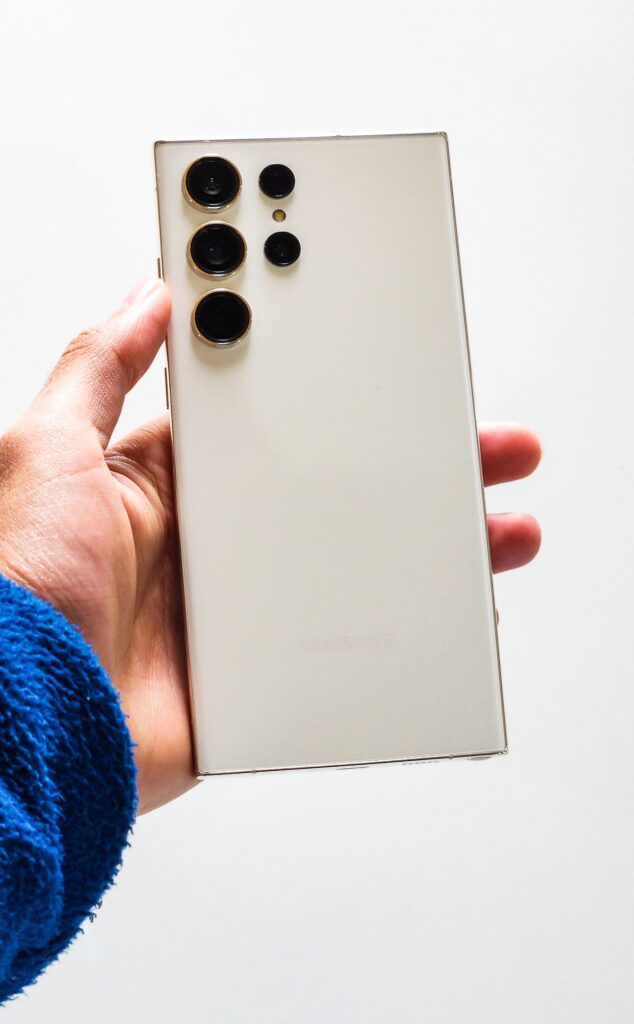
Samsung has finally addressed the structural rigidity of previous generations by replacing sharp, squared-off corners with gently rounded edges. This single change drastically improves ergonomics, allowing the massive phone to sit comfortably in a hand.
Dimensions and Materials
- Footprint: At 6.41 by 3.06 by 0.32 inches and 7.69 ounces, the S25 Ultra is noticeably lighter and sleeker than the outgoing S24 Ultra.
- Materials: It features a premium titanium mid-frame paired with the latest Corning Gorilla Armor 2 front glass, which improves fracture resistance by roughly 29% and dramatically minimizes screen reflections.
- Durability: Standard IP68 dust and water resistance ensures the device survives accidental submersions up to 5 feet for 30 minutes.
Design Quirk: While the overall build quality is immaculate, the integrated S Pen stylus sits slightly proud of the bottom edge rather than resting perfectly flush with the titanium frame.
Display Perfection
The S25 Ultra expands its viewable area slightly to a 6.9-inch LTPO Dynamic AMOLED 2X panel, operating at a crisp resolution of 3,120 by 1,440 pixels. By trimming the surrounding bezels by 15%, Samsung fills nearly the entire front face with glass.
The screen reaches a peak brightness of 2,600 nits. Combined with the anti-reflective armor coating, outdoor legibility under direct sunlight is arguably the best in the industry.
Performance: Custom Silicon Domination
Every tier of the S25 family utilizes the custom Qualcomm Snapdragon 8 Elite for Galaxy processor. Rather than a simple overclock, this variant features a customized architecture optimized for processing complex machine learning tasks directly on the device.
Hardware Configuration
- Memory: 12GB LPDDR5x RAM across all storage tiers.
- Storage Options: 256GB, 512GB, or 1TB of high-speed UFS 4.0 storage (non-expandable).
- Thermal Management: A 40% larger internal vapor chamber helps maintain peak performance under sustained loads.
Benchmark Data & Real-World Gaming
In raw computing power, the S25 Ultra outpaces its competition. In Geekbench 6 multi-core and PCMark mobile productivity tasks, it handily leads the Android pack. For graphics performance, the GFXBench Aztec Ruins test registered an exceptional 86 frames per second, a massive step up from last year’s 66 fps. Heavy gaming sessions in resource-intense titles like Genshin Impact remain silky smooth, with heat safely localized around the camera array without causing hand discomfort.
The New Frontier: Galaxy AI & One UI 7
Shipping with Android 15, the S25 Ultra introduces Samsung’s redesigned One UI 7. The headline feature here is the streamlining of artificial intelligence to act as a seamless, background assistant rather than a collection of disparate tools.
Key AI Ecosystem Enhancements
- Cross App Actions: Partnering with Google Gemini, the phone can handle multi-step requests. Asking it to find a local pet-friendly spot and text the details to a contact executes the entire workflow automatically.
- Natural Language Search: Finding specific items in the deep Settings menu or pulling highly specific images from the photo gallery (e.g., searching for “pictures of statues”) works flawlessly using casual phrasing.
- Audio Eraser & Best Face: Built directly into the offline photo editor, Audio Eraser lets you dial down background environment sounds or wind noise on videos using targeted sliders. Best Face allows you to swap facial expressions in group stills by pulling data from a recorded motion photo.
Camera Capabilities: High Resolution and New Ultra-Wide
The rear camera housing retains its multi-lens layout, anchored by a massive 200MP ($f/1.7$) primary sensor featuring optical image stabilization. The true hardware update arrives via the new 50MP ($f/1.9$) ultra-wide camera, replacing the legacy 12MP unit. This upgrade yields significantly sharper wide shots and introduces an incredibly detailed macro close-up mode.
| Camera Lens | Specs & Zoom Capabilities |
| Main Wide | 200MP, $f/1.7$, OIS |
| Ultra-Wide / Macro | 50MP, $f/1.9$, 120-degree FOV |
| Periscope Telephoto | 50MP, $f/3.4$, 5x Optical Zoom, OIS |
| Standard Telephoto | 10MP, $f/2.4$, 3x Optical Zoom, OIS |
Photographic Results
Images are punchy, vibrant, and exhibit excellent dynamic range. Optical zoom at 3x and 5x remains stellar, though pushing the camera to its 100x digital Space Zoom limit predictably results in soft, heavily digitized images. Low-light processing is highly effective, pulling out crisp details and accurate colors from environments where the human eye struggles to see.
Battery & Connectivity Realities
The phone relies on a 5,000mAh battery cell. In heavy usage scenarios—such as continuous high-brightness video streaming over Wi-Fi—the battery clocked in at 14 hours and 15 minutes. While it reliably outlasts Google’s flagship equivalents, it still trails Apple’s best-performing Max models by a wide margin.
Charging Metrics
- Wired Fast Charging: Maxes out at 45W. A zero-to-full charge completes in 65 minutes (reaching 64% in a half-hour).
- Wireless Charging: Rated at 15W. The phone is “Qi2 ready,” meaning it is fully compatible with magnetic charging alignment accessories, though you must supply your own magnetic case to utilize the functionality.
- Network Speeds: The integrated modem handles modern 5G networks with ease, pushing downloads past 500Mbps on mid-band cellular networks in urban environments.
Technical Summary Matrix
| Specification | Details |
| OS Support | 7 Generations of OS Upgrades & 7 Years of Security Patches |
| Biometrics | Fast In-Display Ultrasonic Fingerprint & Basic Face Unlock |
| Audio Output | Dual Stereo Speakers (Peak Output: 96.3dB) |
| Connectivity | Wi-Fi 7, Bluetooth 5.3, 5G (mmWave/Sub-6), Dual SIM (eSIM + NanoSIM) |
Pros & Cons
Pros
- Unmatched Performance: The Snapdragon 8 Elite sets a new benchmark for speed.
- Practical AI Integration: Cross-app automation simplifies daily digital workflows.
- Exceptional Display: Highly immersive screen with class-leading anti-reflective glass.
- Superb Imaging: Highly versatile camera array backed by a major ultra-wide sensor upgrade.
- Long-Term Value: Industry-leading seven-year software support commitment.
Cons
- Prohibitive Pricing: A premium entry cost makes it a tough sell for casual users.
- S Pen Limitations: The removal of Bluetooth capability eliminates legacy Air Actions.
- Stagnant Charging Speeds: 45W wired charging lags far behind competitors offering 80W+ inputs.