


Sony Alpha 1 ILCE-1 Review – Introduction
Table of Contents
The Sony Alpha 1 (ILCE-1) was designed to bring together three capabilities that professional photographers and filmmakers often have to choose between: extremely high resolution, rapid continuous shooting, and advanced video recording.
With a 50.1-megapixel full-frame stacked CMOS sensor, burst shooting of up to 30 frames per second, and 8K video recording, the Alpha 1 is aimed squarely at professionals who need a camera capable of handling demanding assignments across multiple disciplines.
Its specification sheet is impressive, but this level of performance comes at a premium price. The real question is whether the combination of speed, resolution, autofocus and video features justifies the investment.
Quick Verdict
The Sony Alpha 1 is an exceptionally versatile professional camera. Its 50.1MP sensor provides plenty of detail for high-resolution photography, while the electronic shutter can capture images at up to 30fps with autofocus and automatic exposure tracking.
Video performance is equally ambitious. The camera supports 8K recording at up to 30fps and 4K recording at up to 120fps, making it suitable for everything from commercial production to fast-moving subjects.
The large, high-resolution electronic viewfinder is another major strength, while Sony’s improved menu system makes the camera easier to configure than many earlier Alpha models.
There are compromises. The rear display is less impressive than the camera’s otherwise premium specification, some advanced functions require menu configuration, and the price puts the Alpha 1 firmly in professional territory.
For photographers who need one body capable of handling high-resolution stills, action photography and serious video work, however, the Alpha 1 is a remarkably complete package.
Advantages
- 50.1MP full-frame stacked CMOS sensor
- Up to 30fps continuous shooting with AF/AE tracking
- 8K video recording
- 4K recording at up to 120fps
- Excellent 9.44-million-dot electronic viewfinder
- Advanced autofocus with subject and eye detection
- Five-axis in-body image stabilisation
- Extensive selection of Sony E-mount lenses
- Improved touchscreen menu system
- USB charging and power support
- Professional wired and wireless connectivity
Disadvantages
- Very high purchase price
- Rear screen specification feels modest for a flagship camera
- High-resolution multi-shot images require additional processing
- Limited in-camera RAW editing
- Subject-recognition modes require manual selection
- Large lenses can make the grip-to-lens clearance feel tight
Sony Alpha 1: What Makes It Different?
The Alpha 1 occupies an unusual position in Sony’s full-frame lineup. Instead of concentrating exclusively on resolution, speed or video, Sony attempted to combine all three in a single flagship body.
At its core is a 50.1MP stacked BSI CMOS sensor. The stacked design incorporates memory into the sensor architecture, allowing image data to be read extremely quickly. Sony pairs this sensor with dual BIONZ XR processors to handle the substantial amount of information generated by the camera.
That processing power enables the Alpha 1 to deliver high-resolution images while maintaining very fast shooting performance.
The camera can capture full-resolution 50MP images at up to 30fps using its electronic shutter, with continuous autofocus and automatic exposure. Mechanical-shutter shooting is available at up to 10fps.
For photographers working with wildlife, sports, motorsports or other unpredictable subjects, this combination of resolution and speed is one of the Alpha 1’s defining characteristics.
Resolution Meets High-Speed Shooting
A 50MP sensor is normally associated with studio, landscape, commercial or fine-art photography rather than extreme action.
The Alpha 1 challenges that assumption.
Its stacked sensor and powerful processors allow photographers to retain a large amount of image detail while shooting rapidly. This provides greater flexibility when cropping images later, particularly when working with distant subjects.
The electronic shutter can reach speeds of up to 1/32000 second, while the mechanical shutter reaches 1/8000 second.
The mechanical shutter is rated for approximately 500,000 cycles, according to Sony’s specifications.
Flash photographers also benefit from fast synchronisation capabilities, although the maximum sync speed varies according to the shutter and shooting configuration.
Autofocus and Subject Tracking
Autofocus is another major area where the Alpha 1 is designed for professional use.
The hybrid AF system combines 759 phase-detection points with 425 contrast-detection areas, covering approximately 92% of the frame.
The system can detect and track subjects while maintaining focus during continuous shooting. Real-time Eye AF supports people, animals and birds, making the camera particularly useful for wildlife and portrait work.
Photographers can also prioritise a subject’s left or right eye and use face-priority features to give selected people preference.
One limitation is that the photographer needs to tell the camera what type of subject is being photographed. Switching between people, animals and birds therefore requires either menu changes or assigning the relevant function to a custom control.
Despite this extra step, autofocus performance is extremely fast and capable of keeping up with demanding subjects.
Electronic Viewfinder
The Alpha 1 uses a high-resolution electronic viewfinder with approximately 9.44 million dots and 0.90x magnification.
The EVF provides 100% frame coverage and supports refresh rates of up to 240fps under suitable settings.
One particularly useful feature for action photographers is the ability to maintain a view of the scene while shooting at high frame rates, reducing the interruption normally caused by viewfinder blackout.
The viewfinder can also be adjusted between different refresh-rate settings. The standard setting prioritises image quality, while higher refresh rates provide a smoother view of fast-moving subjects.
For a camera aimed at professional sports and wildlife photographers, this is a significant advantage.
Rear Display and Controls
The rear screen is a 3-inch touchscreen with approximately 1.44 million dots. It can tilt upward and downward, making it useful for shooting from higher or lower perspectives.
However, the display does not feel as impressive as the rest of the camera. Competitors offer larger or higher-resolution screens, and videographers may also prefer a fully articulating display.
The Alpha 1 instead uses a tilting design, which is arguably more appropriate for stills-focused professional photographers.
The electronic viewfinder remains the superior display for many shooting situations.
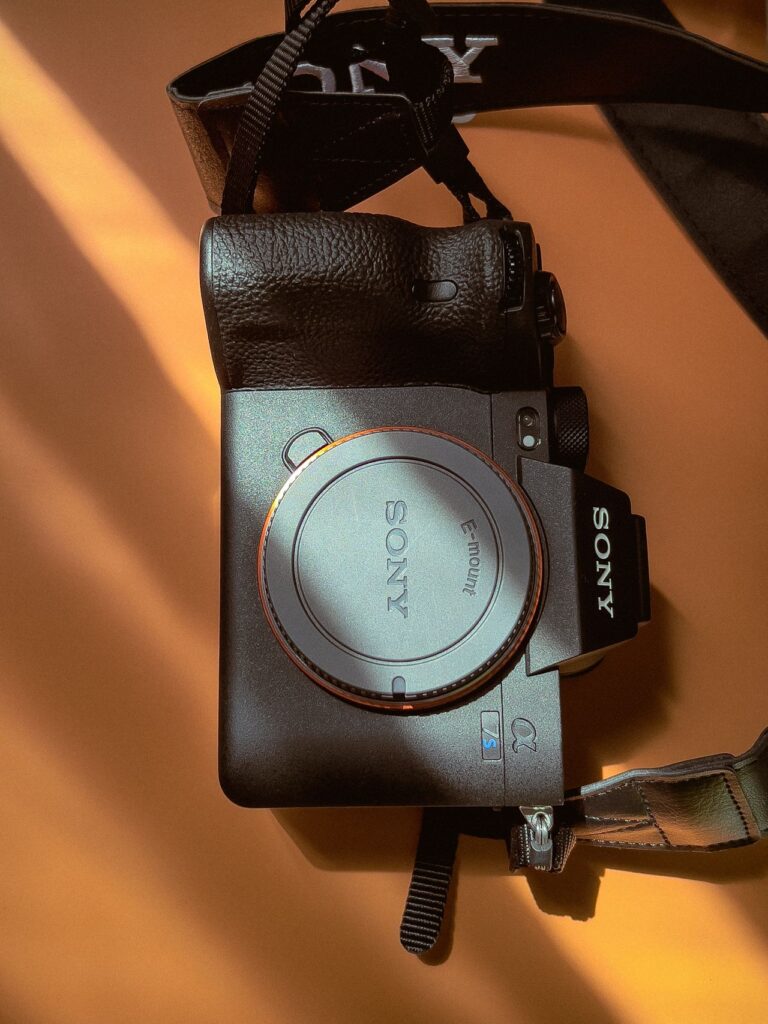
Professional Handling
Sony’s Alpha bodies have gradually become more substantial over successive generations, and the Alpha 1 follows that trend.
The camera weighs approximately 737 grams with its battery and memory card, making it relatively light compared with professional full-size DSLRs while still feeling substantial in the hand.
The grip is comfortably shaped and provides a secure hold. However, photographers using large professional lenses may find the gap between the grip and lens mount somewhat restrictive depending on hand size.
The body uses a magnesium-alloy construction and incorporates sealing intended to improve resistance to dust and moisture.
The memory-card and battery compartments also feature sealing elements and locking mechanisms designed for professional use.
Physical Controls
The Alpha 1 provides numerous physical controls and allows photographers to customise several of its buttons.
The top plate includes locking dials for drive mode, focus mode and exposure settings. The main mode dial also provides three custom shooting positions alongside dedicated video and slow-and-quick options.
Four custom buttons—C1 through C4—can be programmed for frequently used functions.
A rear joystick provides quick control over autofocus positioning and playback navigation, while the rear control wheel offers additional access to frequently used settings.
Most of the controls are comfortably reachable with the right hand. The C3 and Menu buttons positioned on the left side are less convenient because they require the photographer to move a hand away from the primary shooting controls.
Menu System
Sony’s redesigned menu interface is a significant improvement over the company’s older systems.
The menu uses colour-coded sections and separates still-image and video settings more clearly. Touchscreen operation is also available, allowing users to navigate menus and adjust settings directly on the display.
There is a huge range of customisation available, including RAW compression options, HEIF recording, custom settings storage and a personalised My Menu section.
The Fn button provides another shortcut to frequently used controls.
The sheer number of available options can still make the system intimidating for new users, but experienced photographers can configure the camera extensively to suit their workflow.
Video Performance
The Alpha 1 is not simply a high-resolution stills camera with video added as an afterthought.
It offers serious filmmaking capabilities, beginning with 8K recording.
8K Recording
The camera can record 8K video at up to 30fps, using a 7680 × 4320 resolution.
Sony uses oversampling from the sensor to produce highly detailed footage. The extra resolution can also be useful during post-production, allowing editors to crop or reframe footage while maintaining a 4K output.
For productions where maximum detail and post-production flexibility are important, 8K provides considerable headroom.
4K at High Frame Rates
The camera can also record 4K video at frame rates reaching 120fps, making slow-motion recording possible.
Depending on the selected settings, the camera can use high-resolution sensor readout without relying on pixel binning, helping preserve fine detail.
Active image stabilisation is available for compatible video configurations and can improve handheld footage.
Autofocus features such as real-time tracking and Eye AF remain available during video recording, including demanding high-resolution modes.
Professional Video Features
The Alpha 1 supports 10-bit 4:2:2 recording and HLG for HDR-compatible workflows.
Sony’s S-Log2 and S-Log3 profiles provide greater flexibility for colour grading, while S-Cinetone offers a more cinematic colour option derived from Sony’s professional Cinema Line cameras.
The camera can also output 16-bit RAW video data through HDMI when connected to a compatible external recorder.
Sony has incorporated a heat-dissipation design intended to improve performance during extended recording sessions.
Although Sony recommends a 30-minute recording guideline under certain conditions, the High Temperature setting can allow longer continuous recording when circumstances permit.
Image Stabilisation
The Alpha 1 includes five-axis in-body image stabilisation, rated for up to approximately 5.5 stops of compensation.
This is useful when shooting handheld at slower shutter speeds and can also help produce steadier video.
Combined with Sony’s extensive E-mount lens range, the stabilisation system makes the Alpha 1 adaptable to a wide variety of professional shooting environments.
Connectivity
Professional photographers increasingly need to transfer images quickly, and the Alpha 1 includes an extensive collection of connectivity options.
The camera supports:
- 1000BASE-T Ethernet
- USB 3.2 Type-C with 10Gbps transfer capability
- High-speed Wi-Fi using 2×2 MIMO
- Wired and wireless FTP transfer
- Tethered remote shooting
- Bluetooth
- NFC
These features make the camera suitable for studio environments, news photography and professional assignments where rapid file delivery is important.
Lens Selection
One of the major advantages of Sony’s system is the extensive E-mount lens ecosystem.
Sony offers a broad selection of native lenses covering wide-angle, standard, telephoto, macro and specialist applications.
Third-party manufacturers have also developed substantial E-mount ranges, giving photographers additional options across different price points and focal lengths.
For professional users investing in a camera system rather than a single body, this broad lens availability is an important consideration.
Battery Life
The Alpha 1 uses Sony’s Z-series battery system.
Sony rates battery performance at approximately 530 shots when using the LCD and around 430 shots with the electronic viewfinder under CIPA testing conditions.
Real-world performance will vary considerably depending on autofocus use, burst shooting, video recording, display settings and connectivity.
USB charging and in-camera power operation are supported, which is particularly useful for long shooting sessions.
The optional VG-C4EM battery grip can accommodate two batteries and provides additional endurance while also giving the camera a larger professional form factor.
Storage
The camera uses two memory-card slots compatible with UHS-I/UHS-II SD cards and CFexpress Type A cards.
Having dual card slots is particularly valuable for professionals who want an automatic backup of important photographs while working.
The availability of CFexpress Type A also provides the faster write performance required for demanding high-resolution and high-speed shooting modes.
Who Is the Sony Alpha 1 For?
The Alpha 1 is primarily aimed at professionals who need several high-end capabilities in one body.
It makes particular sense for:
- Sports photographers
- Wildlife photographers
- Commercial photographers
- Wedding and event professionals
- High-resolution landscape photographers
- Studio photographers
- Professional videographers
- Hybrid photo/video creators
- Photographers who regularly need to crop heavily
For casual photographers, however, its capabilities may be excessive. A less expensive Sony body can provide excellent image quality without the cost associated with the Alpha 1’s flagship specifications.
Final Verdict
The Sony Alpha 1 is an ambitious flagship that attempts to eliminate the traditional compromises between resolution, speed and video.
Its 50.1MP stacked sensor delivers enormous amounts of detail, while 30fps continuous shooting gives it the speed required for demanding action photography. Add 8K recording, 4K/120p video, sophisticated autofocus, a superb electronic viewfinder and extensive connectivity, and the result is one of Sony’s most capable professional mirrorless cameras.
The biggest obstacle is the price. The Alpha 1 commands a substantial premium over many competing high-resolution mirrorless cameras, and photographers need to decide whether they genuinely require its combination of features.
The rear screen also feels less ambitious than the rest of the camera, and some autofocus functions would be easier to use if subject selection could be changed more quickly.
Nevertheless, for professionals who need a single camera capable of tackling high-resolution stills, fast-moving subjects and advanced video production, the Alpha 1 offers an unusually complete solution.
Bottom line: The Sony Alpha 1 is best suited to photographers and filmmakers who demand flagship-level performance across multiple disciplines and are prepared to pay for that versatility.